Dual curricula in international comparison – BIBB in dialogue with Mexico and Peru
20.08.2025
How can dual curricula be designed in such a way that they meet national quality standards, remain flexible at regional level and meet the requirements of the labour market? This question was the focus of the third 2025 video conference of the Alliance for dual VET in Latin America and the Caribbean. Representatives from Mexico, Peru and Germany discussed approaches and challenges, and the BIBB contributed its experience to the international debate.
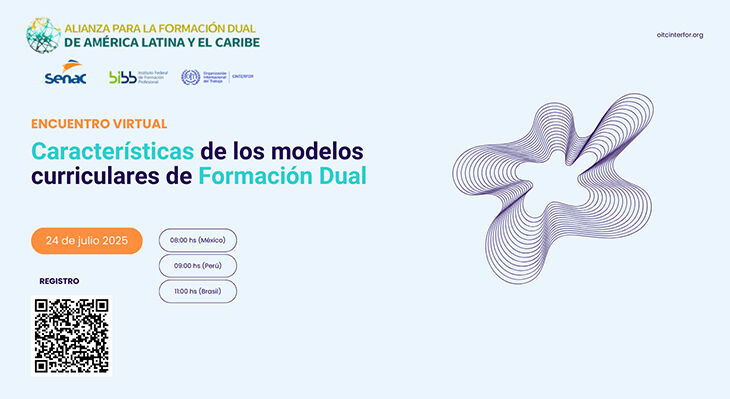
Webinar of the Alliance for Dual VET in Latin America and the Caribbean on curriculum design, innovation and labour market relevance
On 24 July 2025, the third video conference of the Alliance for dual Vocational Education and Training (VET) in Latin America and the Caribbean took place. More than 300 experts from the region followed the exchange of experiences between three key vocational training institutions on models for curriculum design in dual VET: the National College for Vocational Training (Colegio Nacional de Educación Profesional Técnica - CONALEP) from Mexico, the National Service for Training in Industrial Work (Servicio Nacional de Adiestramiento en Trabajo Industrial - SENATI) from Peru and the Federal Institute for Vocational Education and Training (BIBB) from Germany.
In short keynote speeches, the speakers presented their national systems and the special features of their curricula:
Maritza Huitrón from BIBB's partner institute CONALEP in Mexico reported on how her dual model combines a central core curriculum with regionally adapted technical training courses. This allows the needs of the local economy to be addressed in a targeted manner. A special feature is the integration of social and emotional skills, which are embedded in the teaching from a humanistic and constructivist perspective. Walter Rioja from Peru presented SENATI's modular curriculum model, which is based on detailed occupational analyses in companies. This tiered structure enables learners to acquire partial qualifications at an early stage and enter the labour market. Close links with industry ensure that the training content remains practical and up to date. Ilona Medrikat (BIBB) explained the development of nationwide accepted training regulations in the dual system in Germany. In addition to subject-specific content, cross-cutting skills such as digitalisation, sustainability and teamwork play an important role. Updates are made in a coordinated process involving representatives of the government, employers and trade unions, a mechanism that ensures that curricula adequately reflect technological and social changes.
Three countries – three models
In the subsequent discussion, moderated by Gonzalo Graña (ILO/Cinterfor), questions about legal anchoring, regional implementation, modernisation mechanisms and the integration of social and emotional skills were at the forefront.
It became clear that the CONALEP curricula in Mexico offer a high degree of flexibility through regional modules within a national framework, SENATI in Peru pursues a consistent focus on the reality of the workplace and has clear certification levels, while Germany has a structured, federally coordinated system with numerous interlocking quality mechanisms.
All participants emphasised close coordination with the production sector as key to making training programmes fit for the future. From the BIBB's perspective, the exchange confirms the importance of social partnership coordination mechanisms, binding standards and the promotion of interdisciplinary competences. At the same time, the Latin American approaches offer inspiration for greater flexibility and tailor-made regional solutions.
Conclusion: Curricula must remain dynamic
The third video conference made it clear that dual curricula are not a rigid construct. They must be regularly reviewed, modernised and adapted to new technological and social developments. The open dialogue between Mexico, Peru and Germany strengthens mutual understanding and provides valuable impetus for the further development of vocational education and training systems in all three countries.
The next virtual event on curriculum development will take place on 21 August 2025 from 4 to 5:30 p.m.
With its monthly virtual expert events, the Alliance for dual VET in Latin America and the Caribbean offers an important platform for international exchange and the joint shaping of vocational education and training for the future. The series is organised by the Alliance's coordination group, consisting of its current Presidency SENAC (Brazil), the BIBB (reference institution) and ILO/Cinterfor (technical secretariat).