Webinar: Evidence-based policymaking in a fragmented data landscape
15.09.2026
Current and accurate data promotes informed decision making, driving technical vocational education and training (TVET) forward. But how can we build data systems that are comparable and useful for multiple stakeholder groups across sectors and continents?
As part of the BMBFSFJ initiative Towards a Global TVET Agenda (TGTA), the TGTA team at BIBB, in collaboration with the OECD Centre for Skills, is pleased to present a webinar examining a pressing issue in Technical and Vocational Education and Training (TVET):
Topic: How to build a robust global evidence base?
Date: Tuesday, 16 June 2026
Time: 16:00-17:00 CEST
Key Takeaways:
- Diverse TVET systems require a common language - shared concepts and definitions
Participants highlighted the significant diversity of TVET systems across countries, including differences in governance structures, qualifications, learning pathways, and institutional arrangements. While this diversity reflects national contexts and priorities, it also poses challenges for international comparison and evidence generation.
- Informal and non-formal learning must be made more visible
The discussion underscored the importance of informal and non-formal learning, which in many countries constitute a substantial share of skills development and vocational learning opportunities. However, these forms of learning are often insufficiently reflected in existing data systems and reporting frameworks. Strengthening the connection between research and data reporting will be essential for developing a more comprehensive picture of TVET systems worldwide.
- Better evidence requires stronger links between research, data and policy
Participants agreed that collecting data is only one part of the challenge. Effective policymaking depends on the ability to translate research and data into meaningful evidence that supports decision-making.
- International collaboration supports learning and innovation
The webinar highlighted the value of international cooperation in addressing shared challenges. Collaborative initiatives can help develop common approaches, foster mutual learning, and advance efforts to strengthen TVET data and evidence ecosystems globally.
Global TVET Data Report
The webinar drew on the initial findings of a TGTA flagship publication, the protype of a Global TVET Data Report. As the first comprehensive global reference on the state of TVET data, the report seeks to strengthen the evidence base for TVET, foster informed policy dialogue, and support greater international collaboration in skills development.
Next TGTA webinars
This webinar was the first in a series that explores the key themes of the “Towards a Global TVET Agenda” initiative. Further episodes, in collaboration with TGTA partners, to follow on:
- global networks and knowledge exchange with UNESCO-UNEVOC (3rd September);
- Centres of excellence with the ETF;
- social partnership and work-based learning with the ILO.
Speakers
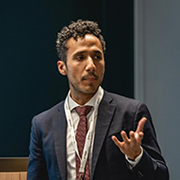
Iván Bornacelly is a Policy Analyst and Projects Lead at the OECD Centre for Skills, where he works on vocational education and training, skills-first approaches, skills intelligence, and the use of data to strengthen education and labour-market policies. His work focuses on how countries can make skills systems more responsive, inclusive and aligned with changing labour-market needs. He currently leads the Global TVET Data Initiative, the first effort to map TVET data at the global level. Before joining the OECD, Iván worked on education, labour-market and public policy issues in Latin America and Europe with the Inter-American Development Bank and the World Bank.

Katharina Engel coordinates the Towards a Global TVET Agenda initiative at the German Federal Institute for Vocational Education and Training (BIBB). Funded by the Federal Ministry for Education, Family Affairs, Senior Citizens, Women and Youth (BMBFSFJ), the initiative strengthens multilateral collaboration with UNESCO-UNEVOC, ILO, OECD, and ETF, as well as WorldSkills International as an associated partner. Katharina joined BIBB in 2022 and served as project manager for the Bridging Innovation and Learning in TVET (BILT) project from 2023 to 2025, a UNESCO-UNEVOC-led initiative implemented with BIBB’s support and funded by BMBFSFJ.

Gonzalo Graña is a Technical Officer at ILO/Cinterfor, where he has worked for over 20 years. His work focuses on research and documentation of social dialogue in and on vocational training in Latin America and the Caribbean, as well as on the capacity building of social partners for their qualified participation in instances of institutionalized social dialogue on vocational training and employment policies. He also has experience on issues related to policies and training programs for young people, within the context of youth employment policies, and in recent years with a focus on quality apprenticeships / dual training programs in the region. Additionally, outside of the ILO, he has worked in the area of monitoring and evaluation of public policies in the central administration in Uruguay, as well as in applied research in university management. He is a sociologist and lawyer by training.
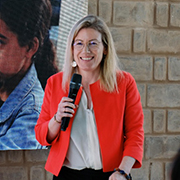
Hélène Guiol holds two degrees, in History and in Educational Sciences and has 19 years of experience in the field of education policies, of which seven are within the French vocational training and apprenticeship system. Her work at UNESCO Headquarters began in 2013, through the coordination of various capacity development and support for reforms of education and training systems projects across countries in the sub-Saharan Africa, North Africa, Middle East and Asia regions. Moreover, between 2015 and 2020 she coordinated at a global level the Inter-agency Working Group on Workplace Learning and Career Guidance. She has led several TVET policy reviews and has contributed to global and regional policy response initiatives during the COVID-19 pandemic, as well as reviews of lifelong learning systems. In early 2021, she joined the UNESCO Regional Office for Maghreb as Head of Education and has been leading the Education Programme for Algeria, Libya, Morocco, Mauritania and Tunisia, including supporting local education and training reforms and supervising publications.

Dr. Gesa Münchhausen is a senior VET expert at the Federal Institute for Vocational Education and Training (BIBB), where she has been working since 2001. She brings extensive experience in research, development, and policy consulting at both national and international levels. Her research expertise includes international comparative VET research, validation of non-formal and informal learning, integrated reporting on continuing education and training, and competence development in the labor market. She works in the international department at BIBB, and is part of the TGTA initiative. She leads the Focus Area Global VET Data Reporting. Dr. Münchhausen holds a doctorate in educational sciences from Bielefeld University.

Jessica Rosenfeld supports the “Excellence in VET” initiative at the German Federal Institute for Vocational Education and Training (BIBB), which focuses on fostering multilateral collaboration towards a Global TVET Agenda. She joined BIBB in March 2022 as part of the Bridging Innovation and Learning in TVET (BILT) project, implemented by UNESCO-UNEVOC. For the last four years, she has been responsible for the conception and moderation of webinar series.