BIBB at WorldSkills 2026
Joint commitment to a global TVET agenda and multilateral cooperation
How can technical and vocational education and training (TVET) be made fit for the future? At the WorldSkills Conference 2026 in Shanghai, the BIBB, together with the BMBFSFJ and international partners, drove forward cooperation on a global agenda. A new agreement with a UN organisation sends a clear signal in this regard.
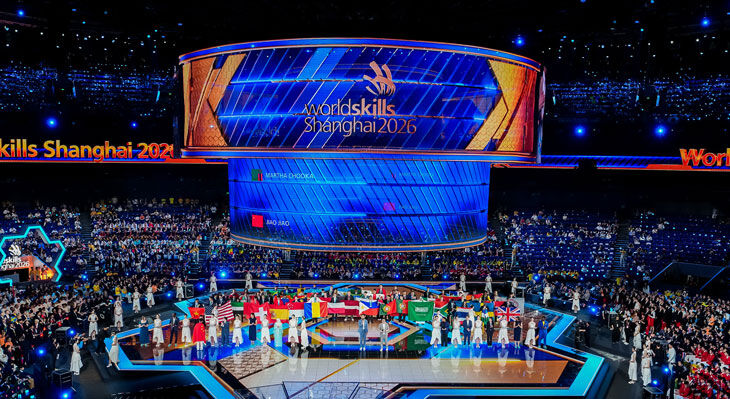
How can vocational education and training systems respond to changes brought about by advancing digitalisation, artificial intelligence, demographic change and the demands of sustainable development? Delegations from more than 70 countries discussed these questions at the WorldSkills Conference in Shanghai. The conference provided an opportunity to exchange on joint approaches and expand international partnerships.
The Federal Institute for Vocational Education and Training (BIBB) played several roles at the event: as coordinator of the TGTA initiative, as a centre within the UNEVOC network and as a partner institute in international cooperation.
Working together for a global TVET agenda
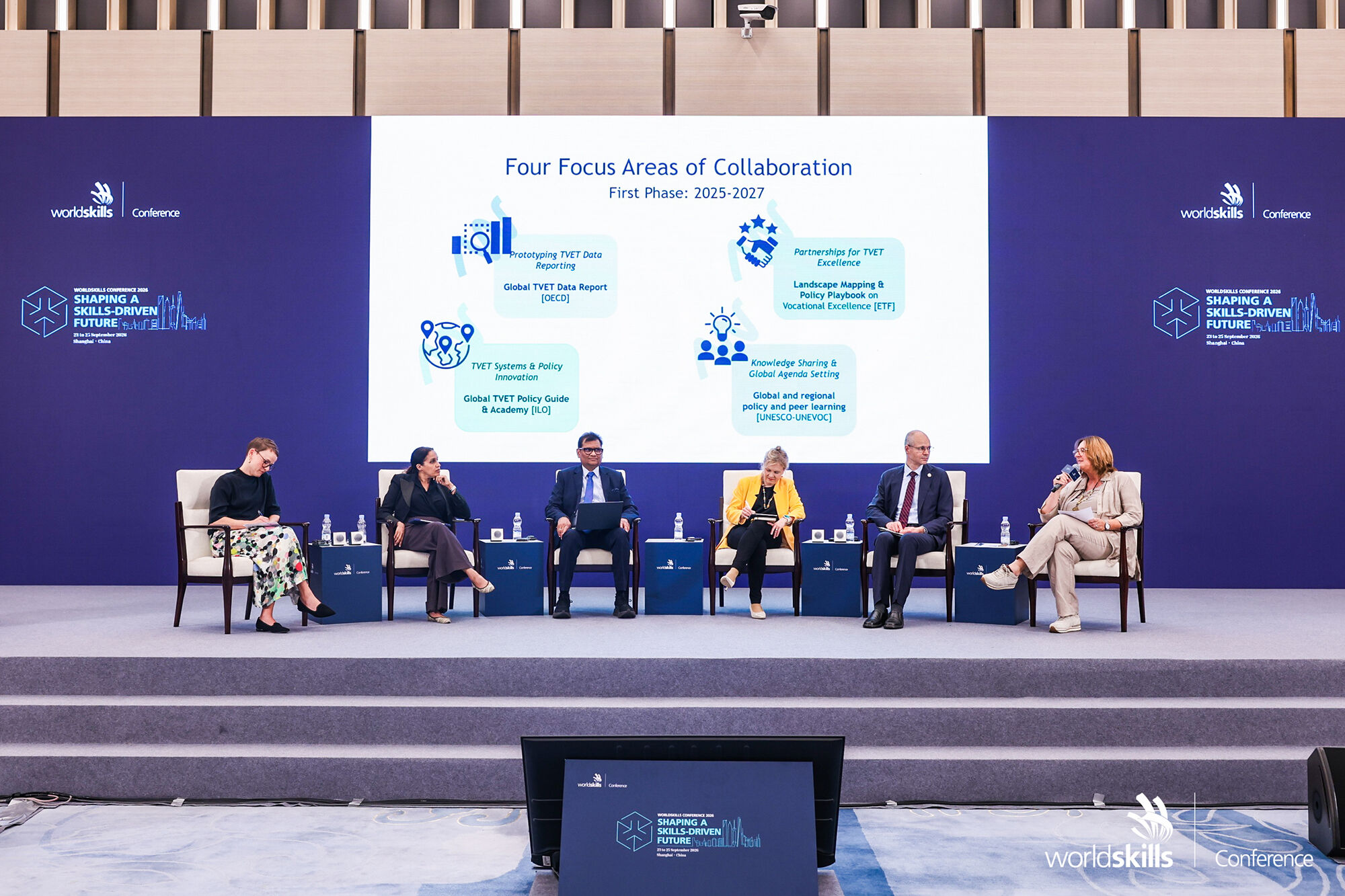
Through the ‘Towards a Global TVET Agenda’ initiative, the participating organisations aim to strengthen international cooperation in vocational education and training and to establish a shared vision for its further development. The Federal Ministry for Education, Family Affairs, Senior Citizens, Women and Youth (BMBFSFJ) launched and supports the initiative; the BIBB coordinates it. At a joint conference session, the BIBB, the UNESCO-UNEVOC International Centre for Technical and Vocational Education and Training (UNESCO-UNEVOC), the International Labour Organisation (ILO), the Organisation for Economic Co-operation and Development (OECD), the European Training Foundation (ETF) and WorldSkills International presented key areas for action:
- Improved availability and comparability of TVET data to support evidence-based policy decisions.
- International exchange on centres of excellence and innovation to drive development at the policy and practical levels – including through skills competitions.
- Knowledge exchange and capacity building to strengthen social partnership, work-based learning and lifelong learning, and support TVET reforms.
- Policy dialogue on TVET reforms in across national and regional contexts, to facilitate mutual learning.
The perspective of young learners and skilled workers was also addressed: Narmeen Almarzooqi, a former WorldSkills champion and now a WorldSkills Champions Trust representative for Middle East & North Africa, and David Hoey, Chief Executive of WorldSkills International, highlighted why international cooperation is important for young people’s opportunities in their professions.
The TGTA initiative is also intended to help strengthen the position of vocational education and training within the UN’s post-2030 education agenda. To this end, the partners aim to extend their cooperation beyond the current group of international organisations to include further countries.
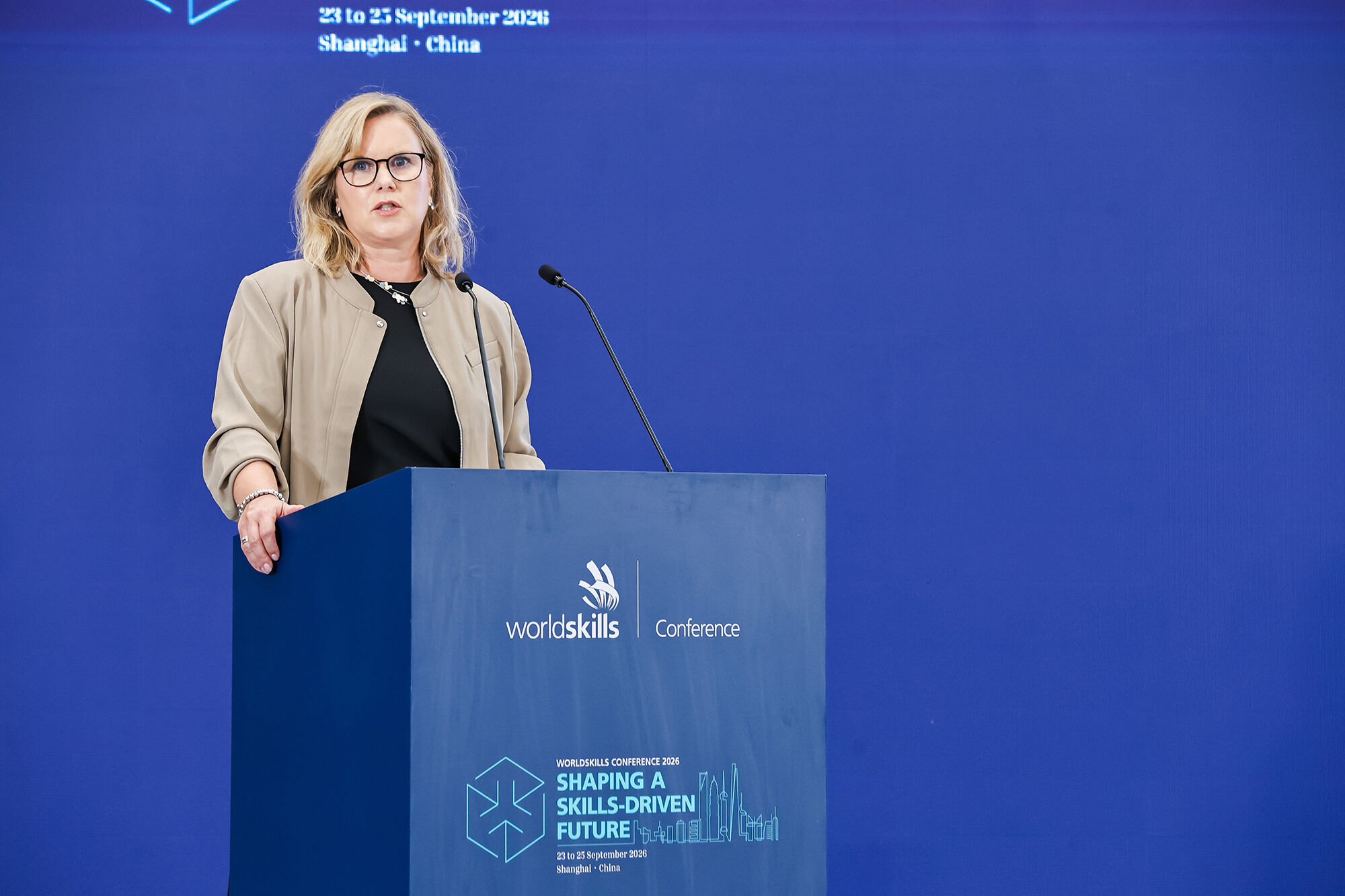
Dr Catrin Hannken, Head of Department ‘Vocational Education and Training and Lifelong Learning’ at BMBFSFJ, announced plans to involve additional partner countries for the initiative. Only by working together with countries that share a drive for reform and a willingness to innovate can a global agenda be advanced.
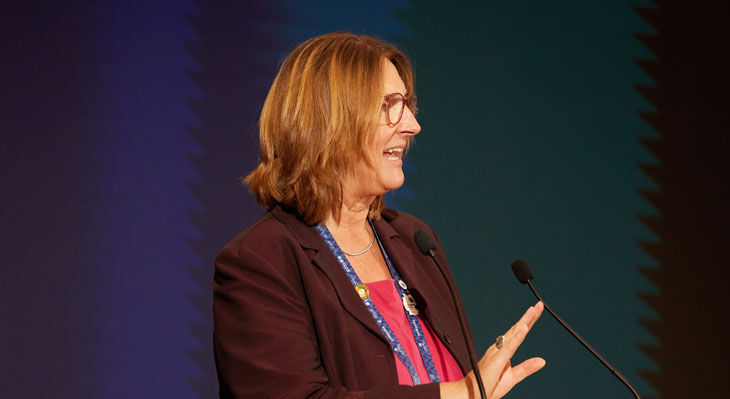
Birgit Thomann, Head of Department ‘VET International’ at BIBB, presented the Federal Institute’s perspective on international cooperation, mutual learning and TVET research, and emphasised the importance of the TGTA as a platform for long-term partnerships and exchange between different TVET systems.
The initiative was also present beyond the TGTA session: during the three days of the conference, participants were able to engage in direct dialogue with the TGTA team via a new matchmaking format – the ‘Skills CoLab’ – and find out more about the initiative at its own stand.
UNIDO: Cooperation agreed under the TGTA
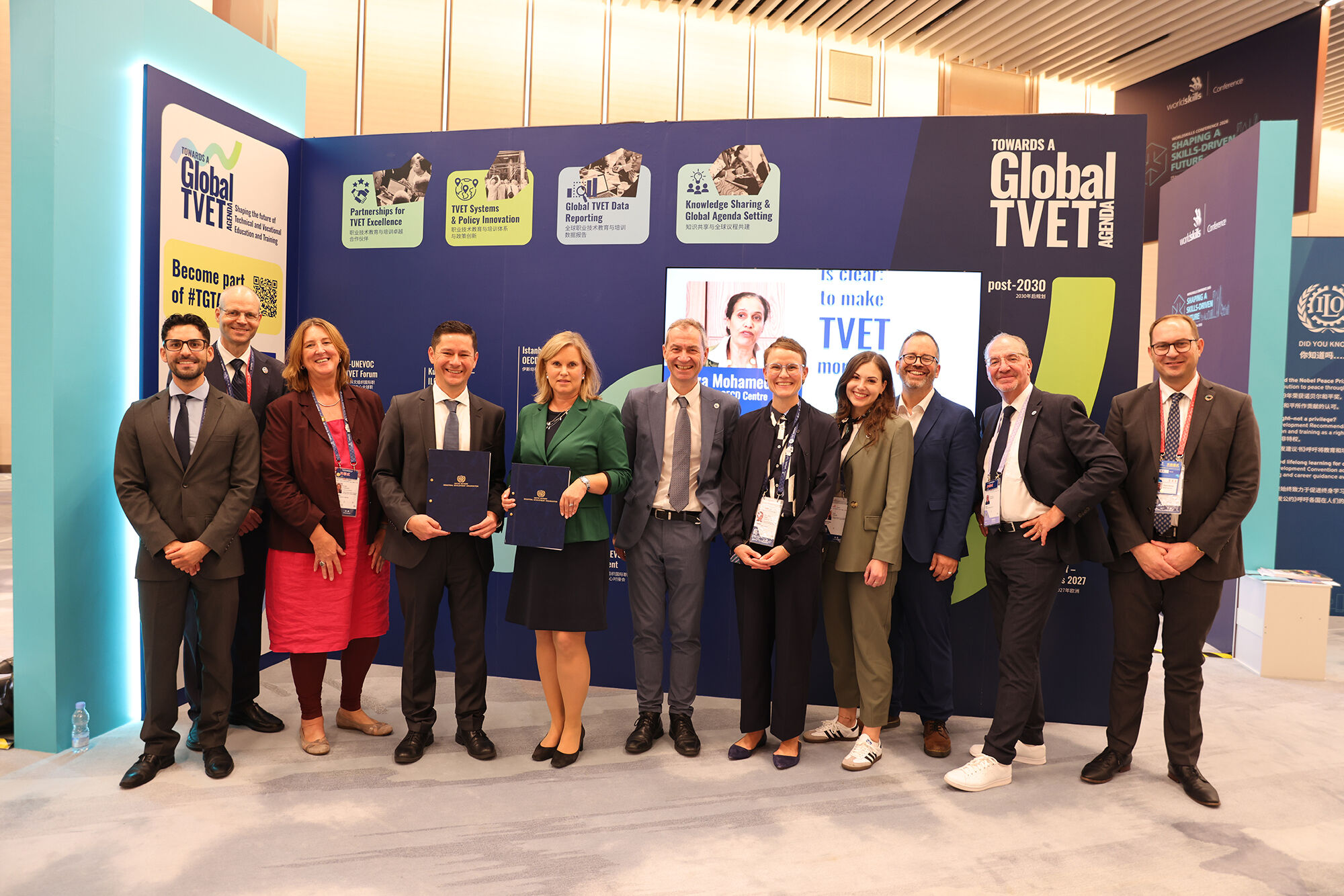
One concrete outcome from Shanghai is the joint declaration between the BMBFSFJ and the United Nations Industrial Development Organization (UNIDO). It lays the foundations for cooperation within the framework of the TGTA initiative.
The BIBB is already working closely with UNIDO on its contribution on the topic of ‘Youth participation and economic prospects for vocational training’. This adds a perspective to the TGTA initiative that focuses on the link between skills development, employment and sustainable economic development. The press release on the signing of the joint declaration can be found via the link in the ‘Further information’ section.
BIBB expertise on digitalisation, sustainability and dual VET
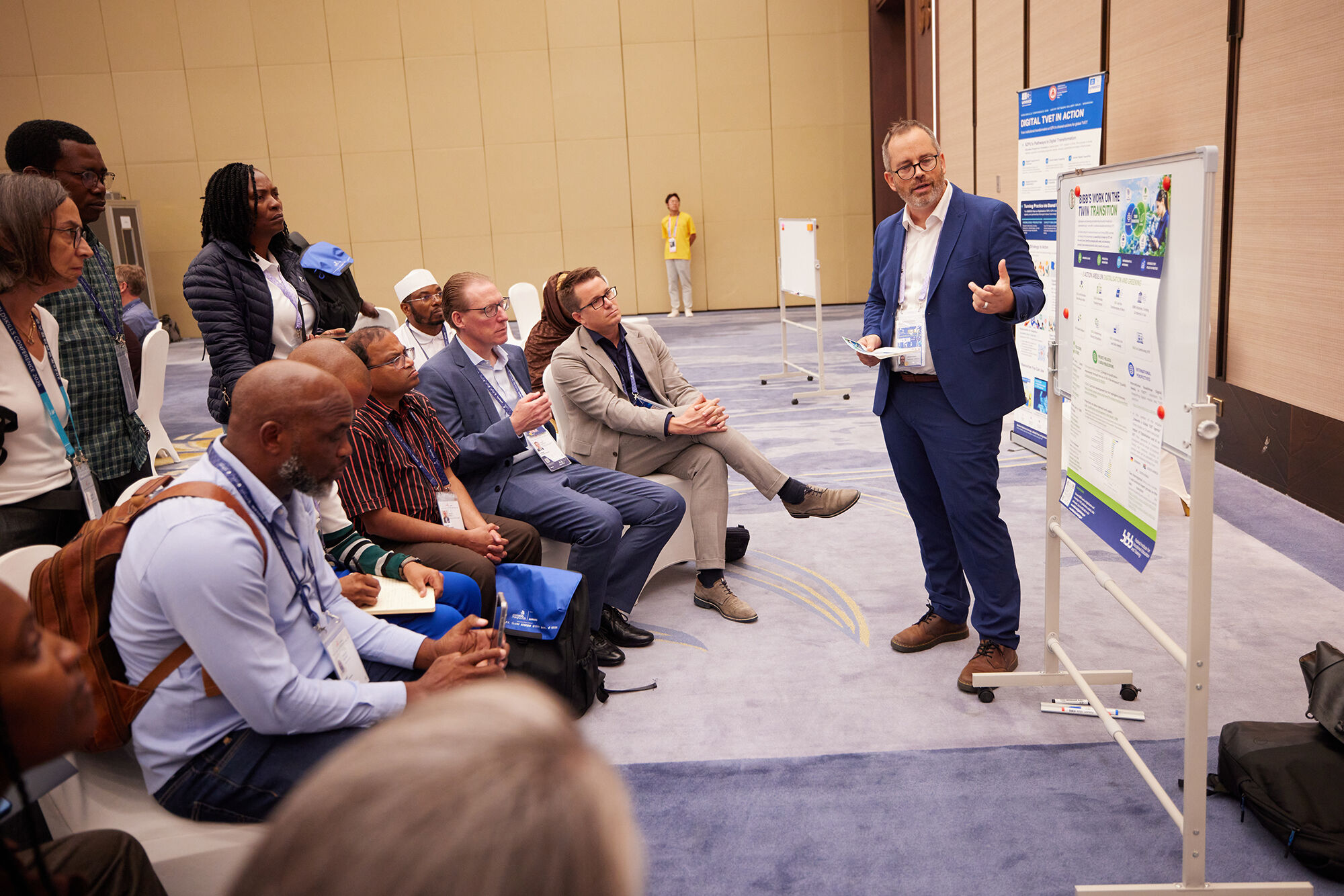
What competences are needed for the digital and green transformation, and how can vocational education and training systems respond to this? These questions were the focus of a conference session led by UNESCO-UNEVOC. As a German UNEVOC Centre, the BIBB presented its work on digitalisation, artificial intelligence and sustainability – ranging from research and TVET data, to pilot projects, to the modernisation of training occupations and the identification of new skills requirements.
Birgit Thomann explained which strengths of the German dual system are relevant for international exchange on digitalisation and sustainability: the shared responsibility of the government, business and social partners; learning in the workplace; recognised standards; qualified teaching and training staff; and institutionalised TVET research. These structures can help adapt vocational education and training to the demands of a digital and sustainable future.
Team Germany successful at the WorldSkills competitions
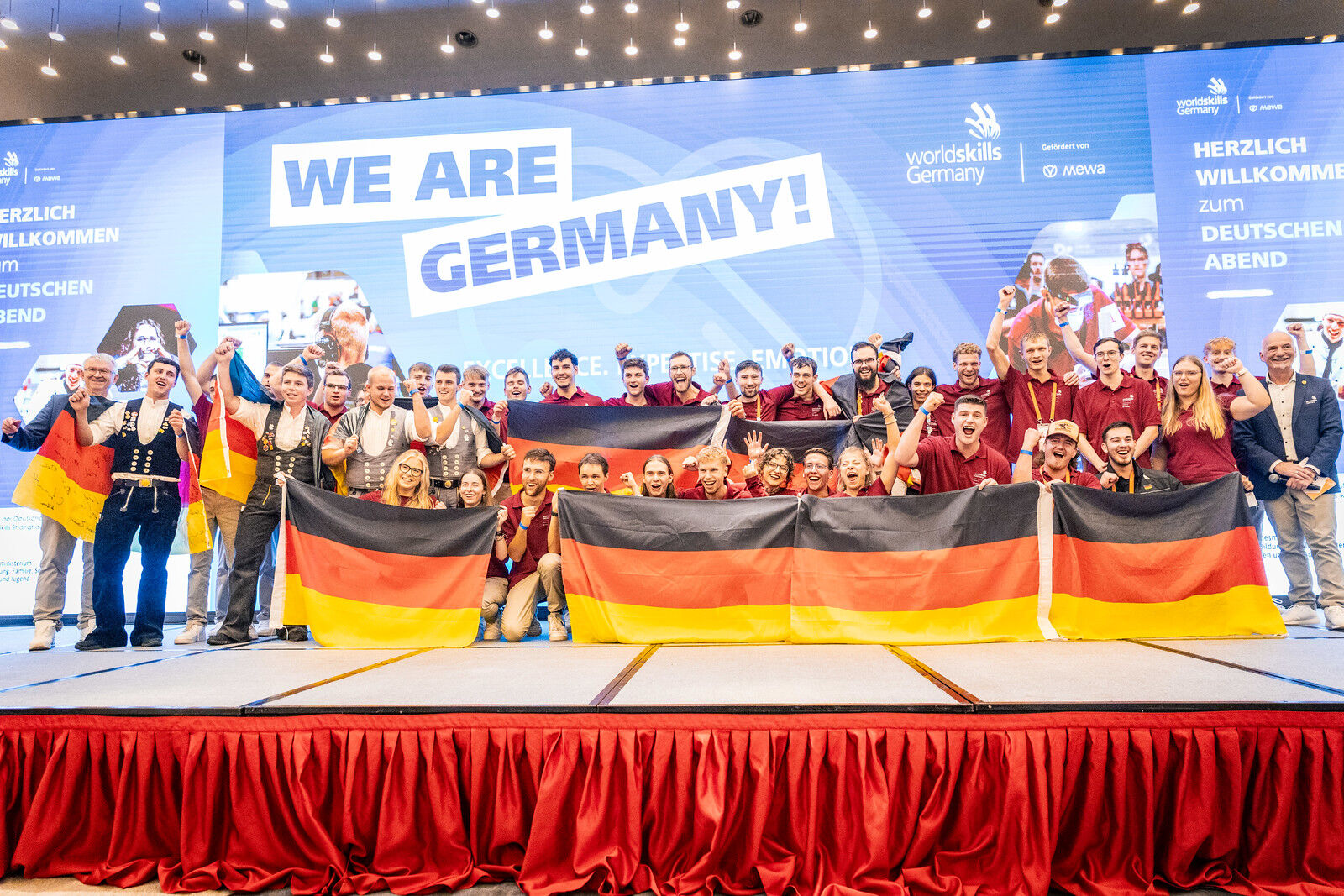
The German national team also enjoyed success at WorldSkills: 36 talents competed in 31 disciplines and secured a total of 22 medals, including two gold, one silver and three bronze medals, as well as 15 medals of excellence, and one additional silver medal in the special competition ‘Speed Programming’. The BMBFSFJ supports the national selection processes, the training and the German team’s participation; the BIBB implements the funding programme. More insights about Team Germany and their time in Shanghai are available from WorldSkills Germany under ‘Further information’.