Bamboo and TVET: Philippine delegation visits BIBB
26.11.2026
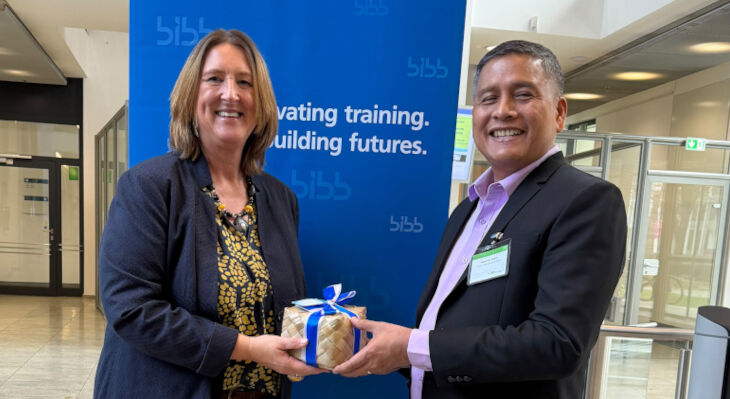
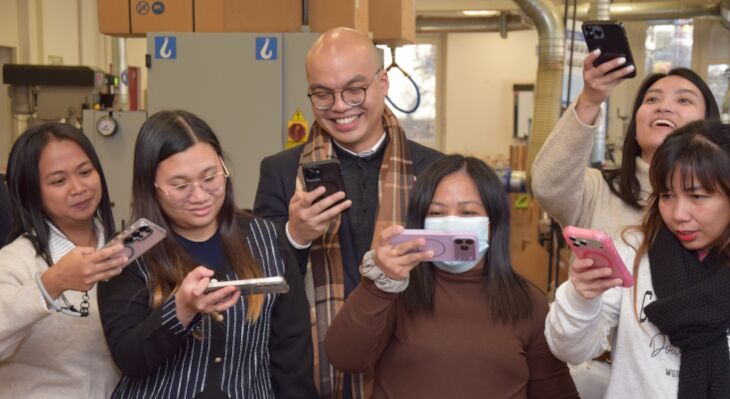
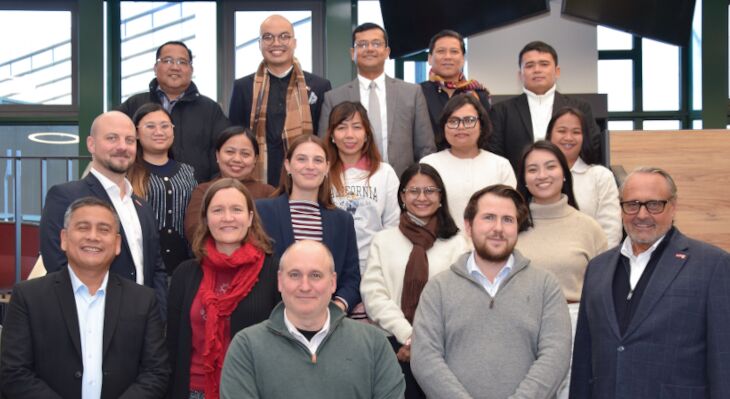
A delegation from TESDA, a partner organisation from the Philippines, visited the BIBB and learnt about the latest developments in VET in Germany. The group used the cultivation and processing of bamboo in the Philippines as a case study to outline the requirements for TVET.
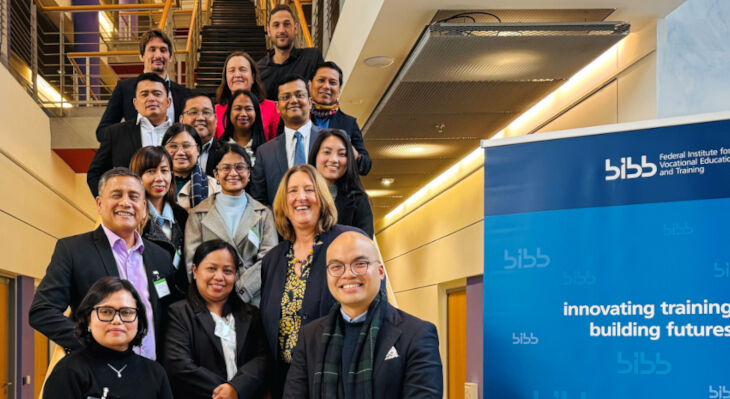
TESDA is the Philippine authority for vocational training (Technical Education and Skills Development Authority). TESDA and BIBB have been working together since 2014 on the basis of a cooperation agreement. The recent visit took place as part of a programme funded by the Asian Development Bank aimed at improving the quality and relevance of technical vocational education and training (TVET) in the Philippines. This includes the further development of TESDA’s technology institutes and regional offices. The week-long study visit to Germany was organised in this context. The 13-member group spent two days in Bonn, before travelling on to Stuttgart for visits to companies and the chamber of commerce.
The focus of the TESDA visit to BIBB was on exchanging views on the TVET systems of the two countries, the modernisation of curricula, and the question of how vocational qualifications can be adapted to economic, technological, environmental and social changes.
In the Philippines, too, workplace-based training formats have been in practice for many years; since 2024, they have been consolidated under the so-called ‘Enterprise-Based Education and Training (EBET)’ scheme and enshrined in law. During discussions with BIBB expert Verena Schneider, the group was impressed by how actively German companies participate in training and by the significance of the Chambers within the German TVET system. The independence of research and regulatory work at BIBB also aroused interest. Gio Franco Gomez, Executive Director at TESDA’s Partnerships & Linkages Office at TESDA, said: “In the Philippines, our training regulations division needs a ‘trigger’ from our research division before it can act on developments in a sector. In my view, the German model offers greater flexibility when it comes to updating and further developing standards,” said Gio Franco Gomez.
TVET and Sustainability in Bamboo Cultivation
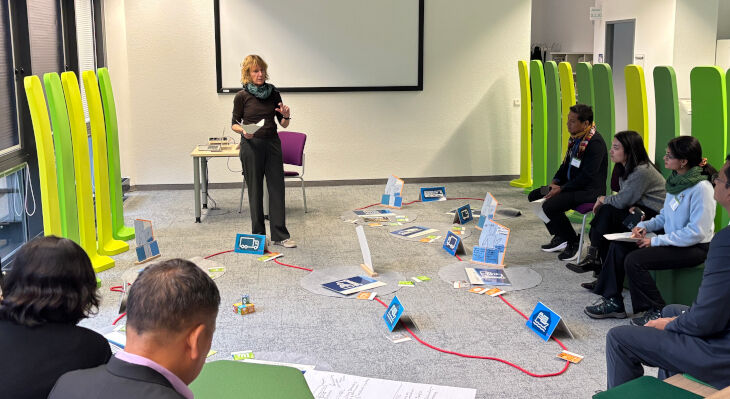
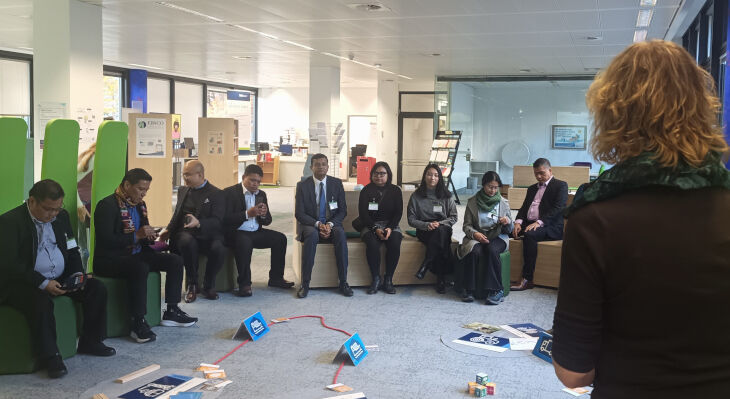
TVET for sustainability, as illustrated by the value chain, were the subject of a workshop led by Dr Hanno Kress (BIBB). The so called “VET Chain” workshop, developed at BIBB, illustrates TVET along global supply chains and encourages participants to reflect on environmental and social sustainability issues in training and work. The group used the cultivation and processing of bamboo in the Philippines as a case study to outline the requirements for TVET. This traced the process from the cultivation of the raw material to the manufacture of products, which are sold in Germany, amongst other places.
TESDA endorsed the findings of this ‘VET Chain’ workshop not only in terms of sustainability, but also in its efforts to further empower regional innovation centres in the future to utilise labour market information for the planning of their training programmes.
“Using the VET Chain method, we can easily identify higher-level TVET programmes that the TESDA Technology Institutions will implement to be supported by the technologies, and equipment of the regional innovation centres to provide learners with an authentic learning environment - all while adding a much-needed cultural dimension to our industry analysis” explains Marinela Soriano, a specialist involved in the management operations of the regional innovation centres in TESDA. This provides opportunities for applied research and TESDA’s entrepreneurship initiatives, and learners are guided to develop practical solutions.
“The study visit provided valuable impetus to make greater use of our Philippine labour market data – including for applied research and our entrepreneurship initiatives.”
Marinela Soriano, Senior TESD Specialist at the National Institute for Technical Education and Skills Development Office
Skills forecasts and labour market data
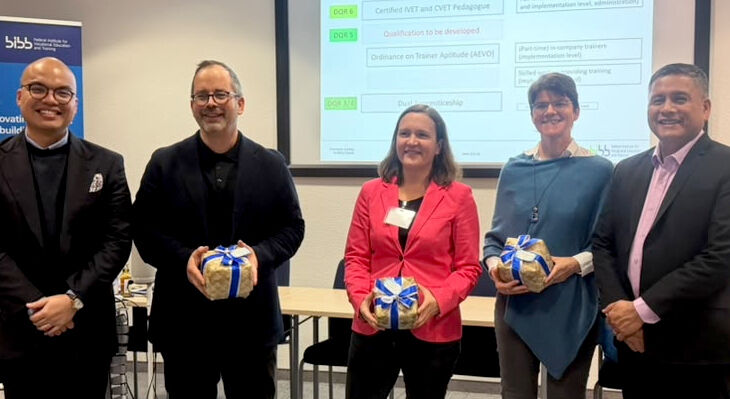
Dr Tobias Maier and Timo Schnepf (both BIBB) used the BIBB projects QuBe (“Skills and Professions of the Future”) and the “Occupation and Competence Radar” to demonstrate how data and forecasts can help identify future skills needs and incorporate them into TVET planning. These topics provided a basis for future cooperation between BIBB and TESDA, which is set to be relaunched in March 2027.
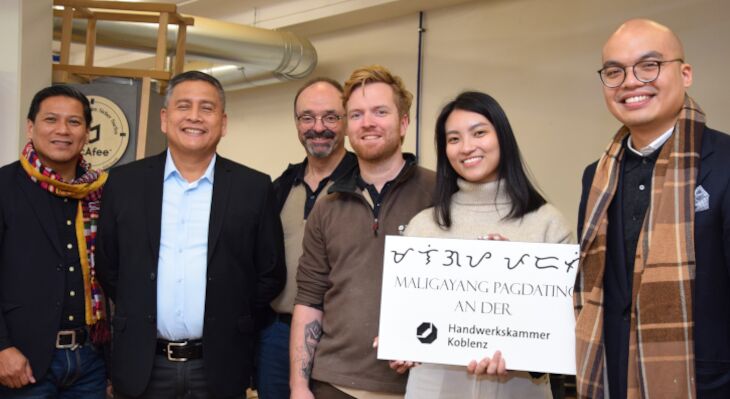
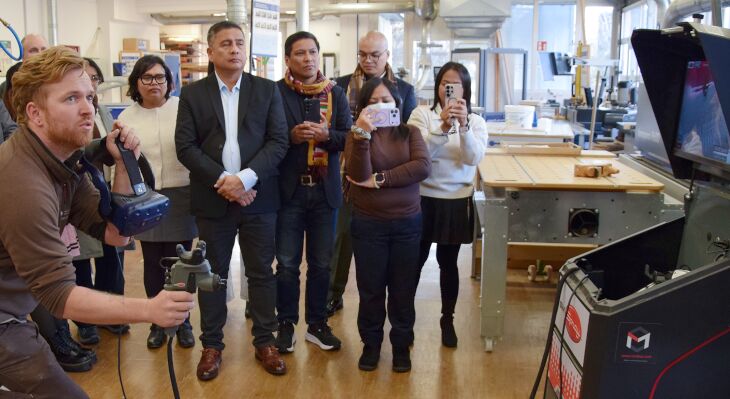
On the second day, valuable insights into an inter-company training centre were provided at the Metal and Technology Centre of the Koblenz Chamber of Crafts (HWK). The Chamber’s trainers demonstrated current technologies and the requirements for modern training, for example in the field of woodworking or when applying paint using VR headsets. In discussions with the Chamber team, many aspects of the dual system of dual VET were explored and the theoretical topics covered the day before were revisited.
An atmosphere conducive to discussion
It was a very engaged group with plenty of questions and comments on the German TVET system – resulting in an extremely lively exchange. Gilbert M. Castro, head of the TESDA delegation, emphasised that the topics covered during the study visit had been of great relevance to vocational education and training in the Philippines. One of his key insights regarding the project with the innovation centres is: “It became clear to me once again that the added value extends beyond modern facilities and equipment: it lies in connecting industry needs, emerging technologies, competent trainers, quality training and sustainability.” However, everyone involved agreed that the residence in Bonn and Koblenz could have been longer.