Morocco: Fair migration through recognition of qualifications
23.02.2026
As part of its cooperation with GIZ, BIBB has provided information in Morocco about immigration opportunities and the recognition of professional qualifications. The aim is to make procedures more transparent and further strengthen structures.
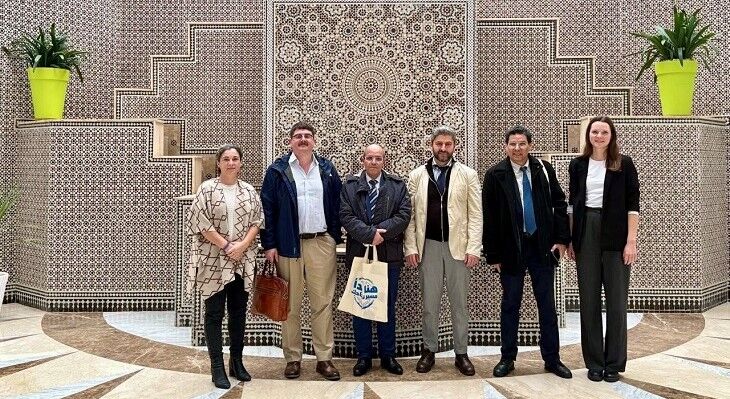
For the second time in two years, Division 3.3, as the information and specialist centre for professional recognition, provided information in Morocco on the various options for professionally qualified individuals to immigrate to Germany.
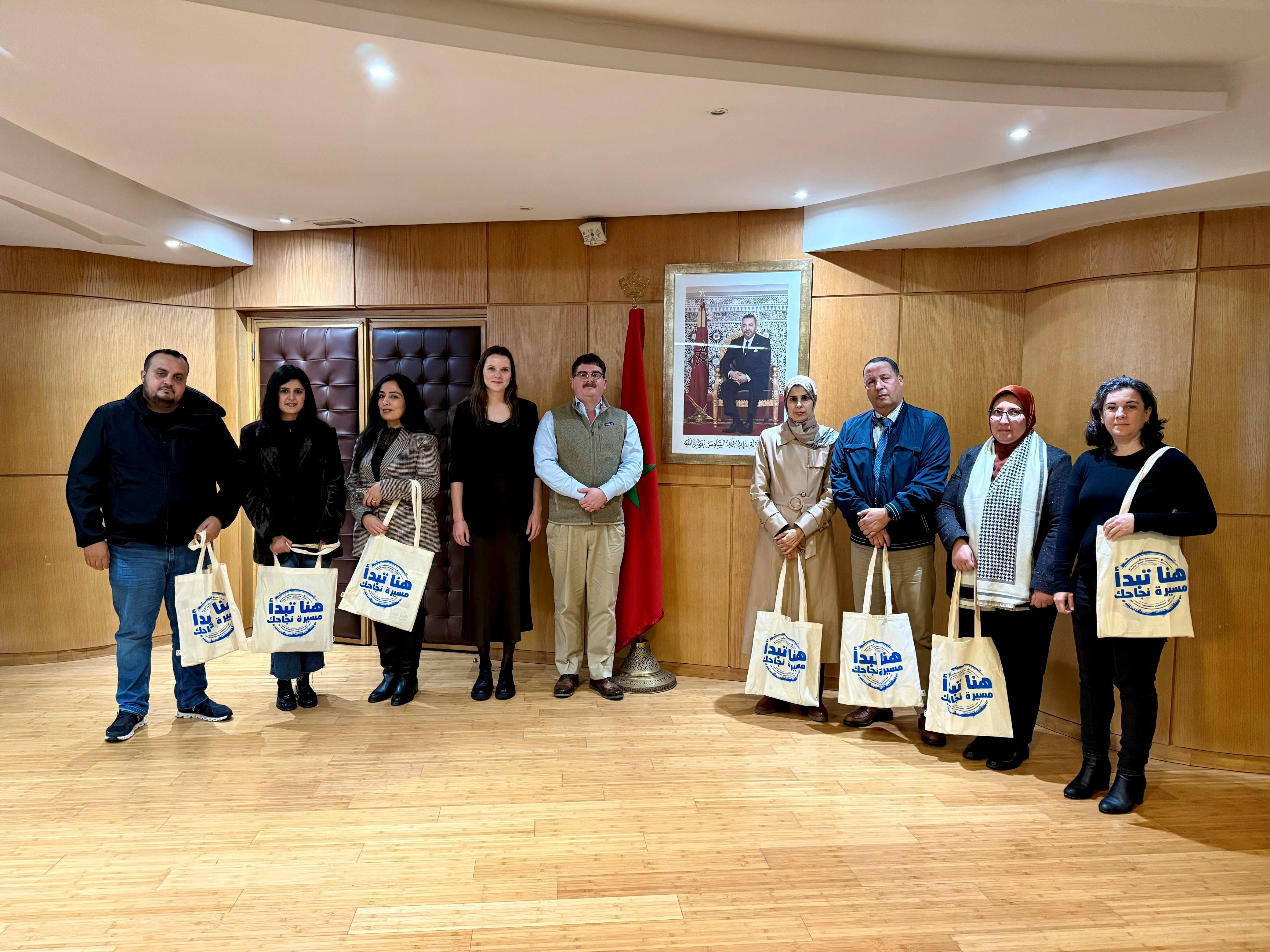
As part of the current cooperation between BIBB and the GIZ project THAMM Plus, discussions were held with the vocational training agency OFPPT, the employment agency ANAPEC and the Ministry of Economic Integration and Employment MIEPEEC.
Focus country for skilled labour recruitment
Morocco has been a close cooperation partner of Germany in the field of skilled labour immigration for several years. Given that the UN Migration Pact was signed in Marrakesh in 2018, it is not surprising that Morocco and Germany agreed on a migration partnership in 2024, which has since been deepened. This partnership is in line with the European Union's migration policy priorities and the German government's development policy goals in the area of regular and fair labour migration. Within this framework, the consolidation of structures for regulated labour and training migration from Morocco to Germany plays a particularly important role.
The statistics show a dynamic development: in 2024, Morocco entered the top 10 for the first time as a country of origin for professional qualifications in procedures for the recognition of foreign professional qualifications in Germany. Morocco has also been one of the most common countries of origin for several years in the area of trainees who come to Germany specifically for vocational training.
With the THAMM Plus project and the Centres for Migration and Development (ZME), the German Society for International Cooperation (GIZ) is creating blueprints for sustainable framework conditions and fair processes for self-directed labour migration. In Morocco, GIZ is taking on a strategic role as a mediator between political priorities at German and European level and the relevant institutions in the partner country, acting as an institutional interface between labour market, vocational training and migration stakeholders. Since 2024, the ProRecognition project has been providing on-site advice on recognition in Morocco.
After many years of exchange between BIBB and the predecessor project THAMM and the current project THAMM Plus, the collaboration was formalised in December 2025, with BIBB advising GIZ in Egypt, Morocco and Tunisia on various options for optimising recognition in Germany. The THAMM Plus project is co-financed by the German Federal Ministry for Economic Cooperation and Development (BMZ) and the European Union (EU).
Partnership between Lower Saxony and the Tangier-Tétouan-Al Hoceïma region to secure skilled labour
From 26 to 30 January, GIZ organised a themed week in Tangier to mark the first anniversary of the partnership between the German and Moroccan regions. The programme ranged from thematic panels and visits to vocational training institutions to joint exchange formats for the further development of the partnership. At the beginning of their trip, Ms Rohr and Mr Studthoff were able to network with stakeholders from Lower Saxony and the TTA region during the theme week and exchange practical experiences.
Exchange with Moroccan stakeholders in vocational education and training and career guidance
In the second part of the trip, BIBB experts Nora Rohr and Alexander Studthoff met with representatives of the Office de la formation professionnelle et de la promotion du travail (OFPPT), the Agence Nationale de Promotion de l'Emploi et des Compétences (ANAPEC) and the Ministère de l'Inclusion économique, de la Petite Entreprise, de l'Emploi et des Compétences (MIEPEEC) in Casablanca and Rabat.
One focus of the exchange meetings was on the various immigration options to Germany for people with professional qualifications, always with the key questions: What are the medium and long-term advantages of having professional qualifications recognised in Germany? And how can interested people in Morocco be informed about this at an early stage?
In discussions with the OFPPT in Casablanca, the focus was on the importance of the German vocational education and training system with its occupational standards and the role of the BIBB within this system. As the OFPPT is also responsible for implementing vocational education and training in Morocco, there was a particular focus on the tasks of the BIBB, processes for modernising occupations and opportunities for closer cooperation between the two institutions. The exchange will be continued through several online training courses offered by the BIBB for OFPPT career counsellors, who will advise future graduates on career opportunities, including in Germany if they are interested.
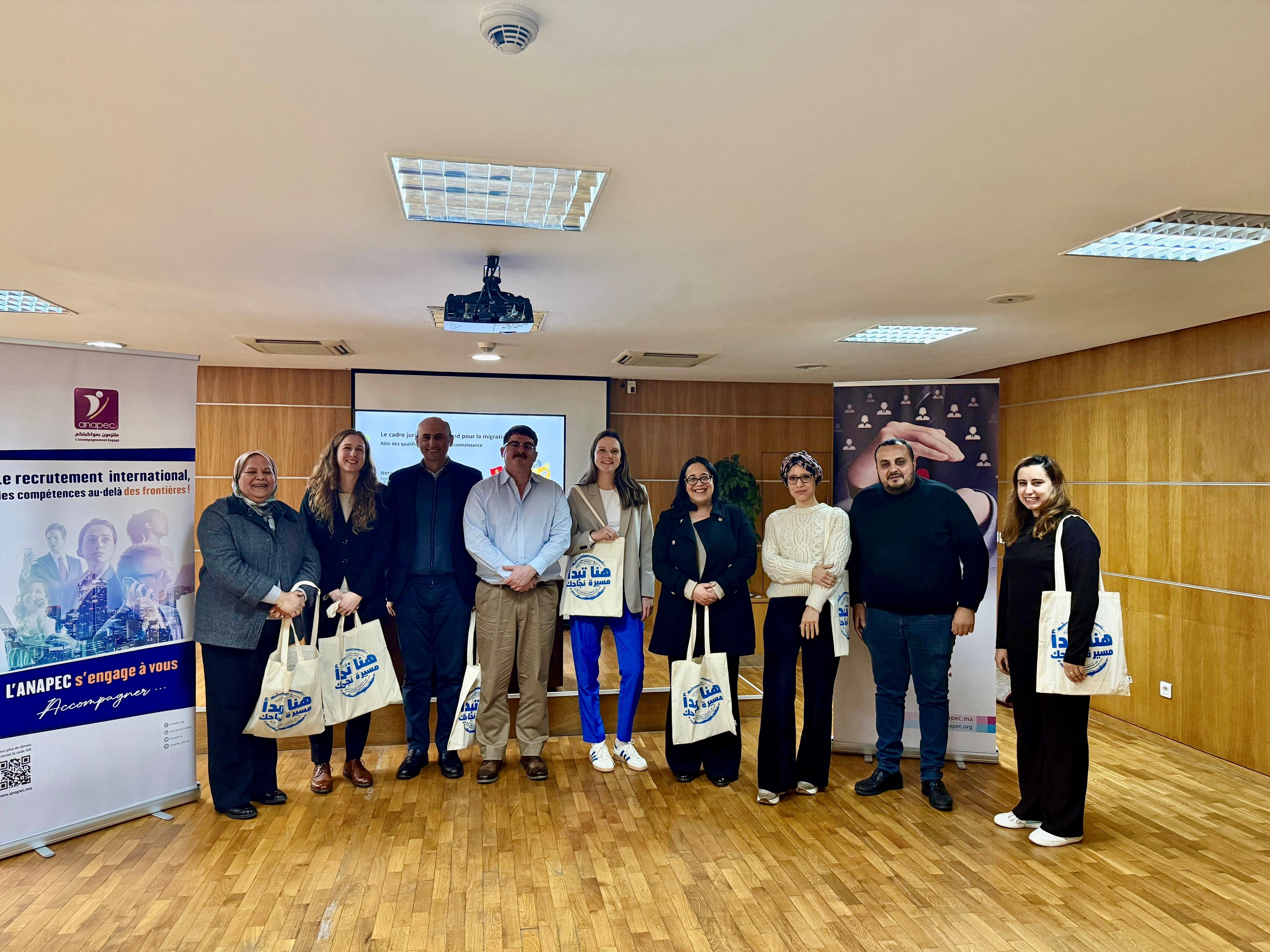
The meeting at ANAPEC headquarters also took place in Casablanca. Thanks to close cooperation between GIZ, the Federal Employment Agency and ANAPEC, the latter has already gained extensive experience in placing Moroccan trainees and skilled workers in Germany. A key topic of discussion was the large number of trainees coming to Germany from Morocco. Although the number of visas issued in Morocco for skilled workers and procedures for the recognition of foreign professional qualifications have also increased significantly in recent years, it was agreed that action was needed to provide qualified individuals from Morocco with early and targeted information about the possibilities for recognising their qualifications. Online training courses will therefore also be held with ANAPEC so that career advisors in Morocco can provide even better information about the possibilities and requirements for recognition in Germany.
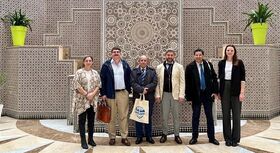
Finally, at MIEPEEC in Rabat, participants also discussed key legal aspects of the German Skilled Immigration Act in the area of professional qualifications and explained further cooperation with OFPPT and ANAPEC for digital training courses. The ministry staff were particularly interested in aspects of governance relating to Germany's vocational training system with its federal structure and the corresponding implications for issues of recognition and skilled labour immigration.
What happens next?
During the meetings, it was agreed that the various options for sustainable immigration and integration for qualified individuals from Morocco should be made more widely known. The digital training courses offered by BIBB for OFPPT and ANAPEC as part of the cooperation with THAMM Plus will make a particular contribution to this.
Overall, Morocco is experiencing significant economic momentum, which is also having an impact on the structure of vocational training there. The intensified cooperation between Germany and Morocco in the area of skilled labour immigration therefore also offers opportunities for increased exchange in the field of vocational training.