Building bridges for technical education reform: A deep dive into the EU-Cambodia Twinning Project
27.04.2026
The EU-Twinning project in Cambodia is a collaborative effort designed to support upper-secondary technical education reform and to bolster the nation's technical and VET landscape. The HIBB from Hamburg and the BIBB represent Germany in a consortium, led by France. Finland is also involved.
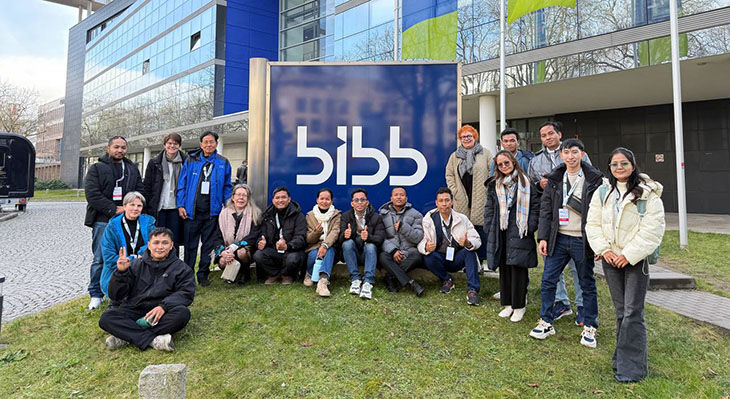
As part of its ambitious Global Gateway strategy, the European Union is fostering sustainable and trusted connections worldwide by investing in infrastructure and human capital. A prime example of this initiative in action is the EU-Twinning Project in Cambodia — a collaborative effort designed to support upper-secondary technical education reform and to bolster the nation's technical and vocational education and training landscape.
The Federal Institute for Vocational Education and Training (BIBB) represents Germany in the consortium in the role as Junior Project Lead, ensures the smooth running of the overall project and supports the implementation of the activities with short expert´s missions.
Background
The Global Gateway and Cambodia's vision for technical education reform
The EU's Global Gateway strategy aims to mobilise investments in digital, energy, and transport sectors, while also strengthening health, education, and research systems across the globe. It is a partnership-based approach, focused on building sustainable local value chains and empowering human capital rather than creating dependencies. Within this framework, the EU is currently funding four European Consortia working in Twinning Projects in Cambodia, addressing sustainable value chains, energy efficiency, renewable energy, and the reform of technical education.
The EU-Twinning Project "Strengthening Upper-Secondary Technical Education Reforms in Cambodia" directly supports the country's industrial development policy by helping to support the reform of technical education. It focuses on the “General and Technical High School (GTHS)” model — a relatively new school type in Cambodia that integrates general subjects and technical education followed for up to three years (Grades 10–12), including work-based learning. Students who complete this double curriculum earn a Technical Certificate Level 3 (C3), which is equivalent to the Cambodian Baccalaureate and opens pathways to both employment and university education.
The flagship project at a glance
With a budget of 2.5 million Euro and a duration of 36 months (2025–2027), the project is a substantial investment in human capital. This is the first EU-Twinning project in Asia to focus on technical training and is therefore regarded as a flagship project that can serve as a model for other countries and twinning approaches. The "Twinning" methodology at its core is not about prescribing solutions, but about fostering genuine peer-to-peer collaboration between European public-sector experts and their Cambodian counterparts at the Ministry of Education, Youth and Sport (MoEYS). The project is implemented by a consortium of European public institutions working hand-in-hand with MoEYS. The consortium of European partners is led by France (Expertise France, France Education International) and consists of partners from Finland (Omnia) and Germany. On the German side, BIBB and the Hamburg Institute for Vocational Education and Training (HIBB) are mandated by the German Federal Ministry for Economic Affairs and Energy (BMWE). The German team consists of Dr Christiane Eberhardt serving as Junior Project Leader for Germany, supported by experts Isabelle Le Mouillour, Dr Anke Bahl, and Franziska Kupfer, from BIBB. The HIBB, represented by Janine Frommann, is responsible for component 2 (curriculum development) and is supported in this by Wolfgang Schernus, Dr Wilko Reichwein, Eva Hjertqvist, Heiko Meiwes and Mario Perlitius from various vocational schools in Hamburg.
What the project does: Three interconnected components
The project is built on three components designed to reform the upper-secondary TVET system from multiple angles simultaneously.
Component 1 — “European-Inspired, Cambodian-Adapted Work-Based Learning (WBL)”, led by Finland's Omnia, focuses on bridging the gap between schools and the private sector. A key challenge in Cambodia is that companies are not yet systematically involved in training students below higher education level. The project is actively working to change this by developing a framework for company participation.
Component 2 — “Curricula Update with a Low-Carbon, Digital and Gender Focus”, led by the Hamburg Institute of Vocational Education and Training (HIBB). The German contribution goes beyond simply updating content. BIBB and HIBB are supporting their Cambodian counterparts in modernizing curricula in five majors: Electricity, Electronics, Mechanics, Food Processing, and Information Technology by introducing them to the "Lernfeldkonzept" (learning field concept) — a didactic approach that structures curricula around holistic, work-process-oriented learning tasks rather than traditional, isolated subjects. By the end of 2025 revised curricula, and textbooks were ready for the next phase: piloting.
Component 3 — “Pre-Service and In-Service Teacher Development”, led France Education International, recognises that the most well-designed curriculum is only effective if teachers are equipped to deliver it. This component focuses on building the capacity of Cambodian TVET teachers and administrators through targeted training and workshops.
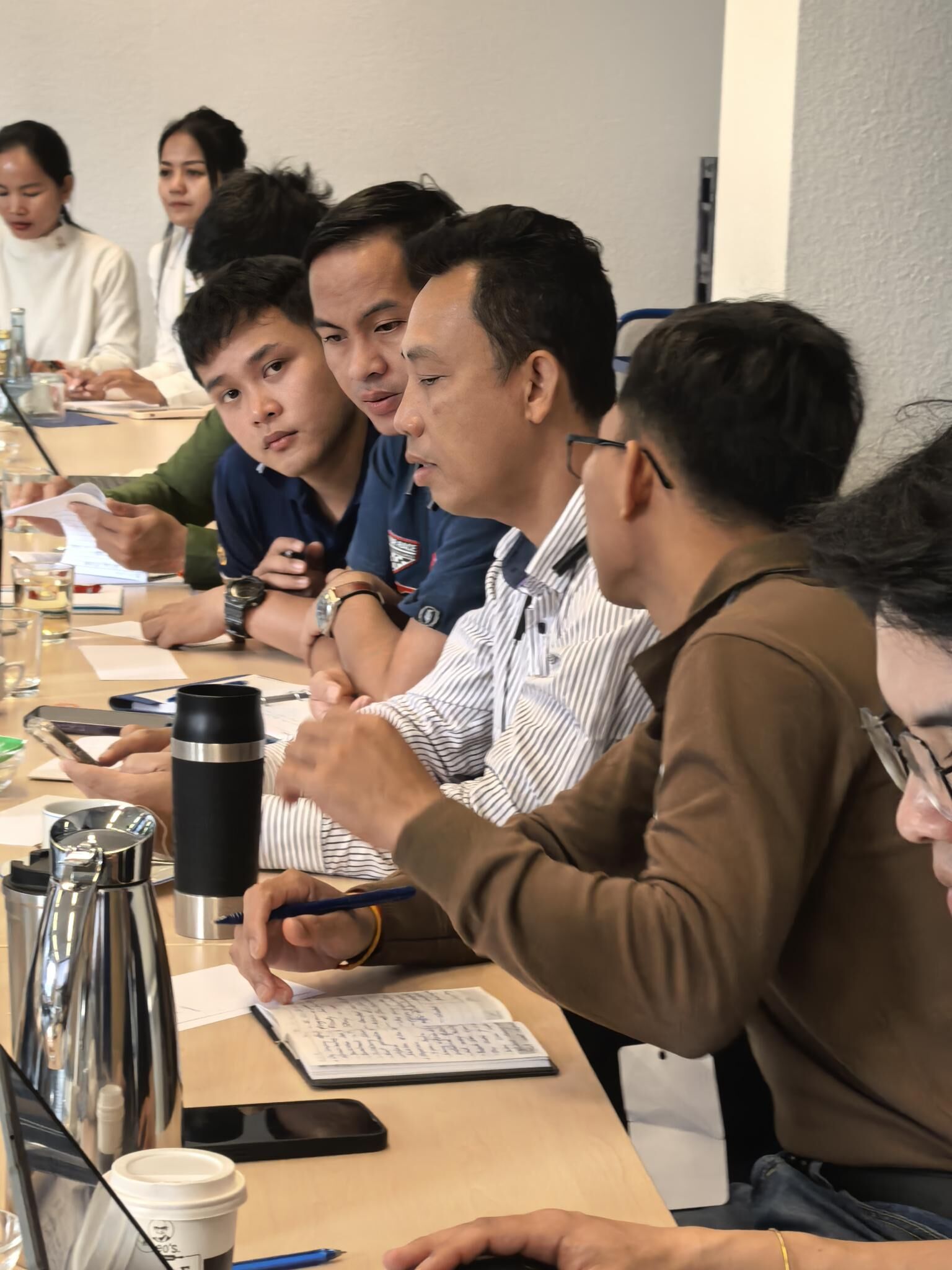
All three components are linked with internships of Cambodian representatives to the consortium countries, providing those who will implement the reforms with concrete, first-hand experience of how TVET systems work in practice in Europe. The internships took place in 2026 (Germany in February, France in March and Finland in April), each offering a different national perspective focusing on one of the three components of the project.
A spotlight on the internship to Germany: How can technical education in Cambodia become more practical — and what role do teachers play in this process?
The first visit took a delegation led by Secretary of State H.E. Im Koch, Cambodia, to Bonn and Hamburg for two and a half weeks. 16 Cambodian education experts travelled to Germany for an intensive internship. The delegation included teachers from seven different vocational schools as well as decision-makers from the Cambodian Ministry of Education. On site, the group immersed themselves deeply in the German system of vocational education and training. The visit was designed to allow the Cambodian teachers to reflect on their role in the transformation process of technical education, to deepen their networks in Bonn and Hamburg, and to discuss and to didactically substantiate issues with their colleagues from the Hamburg vocational schools.
The "learning field approach” (German: Lernfeldkonzept) established in Germany in 1996 proved to be particularly fascinating. It could be a highly promising way to make the Cambodian curricula selected in the project more practical and to further advance the reform of technical education. The internship therefore focused on a clear goal: participants were to gain an expanded understanding of the role of teachers and trainers in vocational training and experience first-hand what company-oriented, practical teaching at vocational schools looks like in reality.
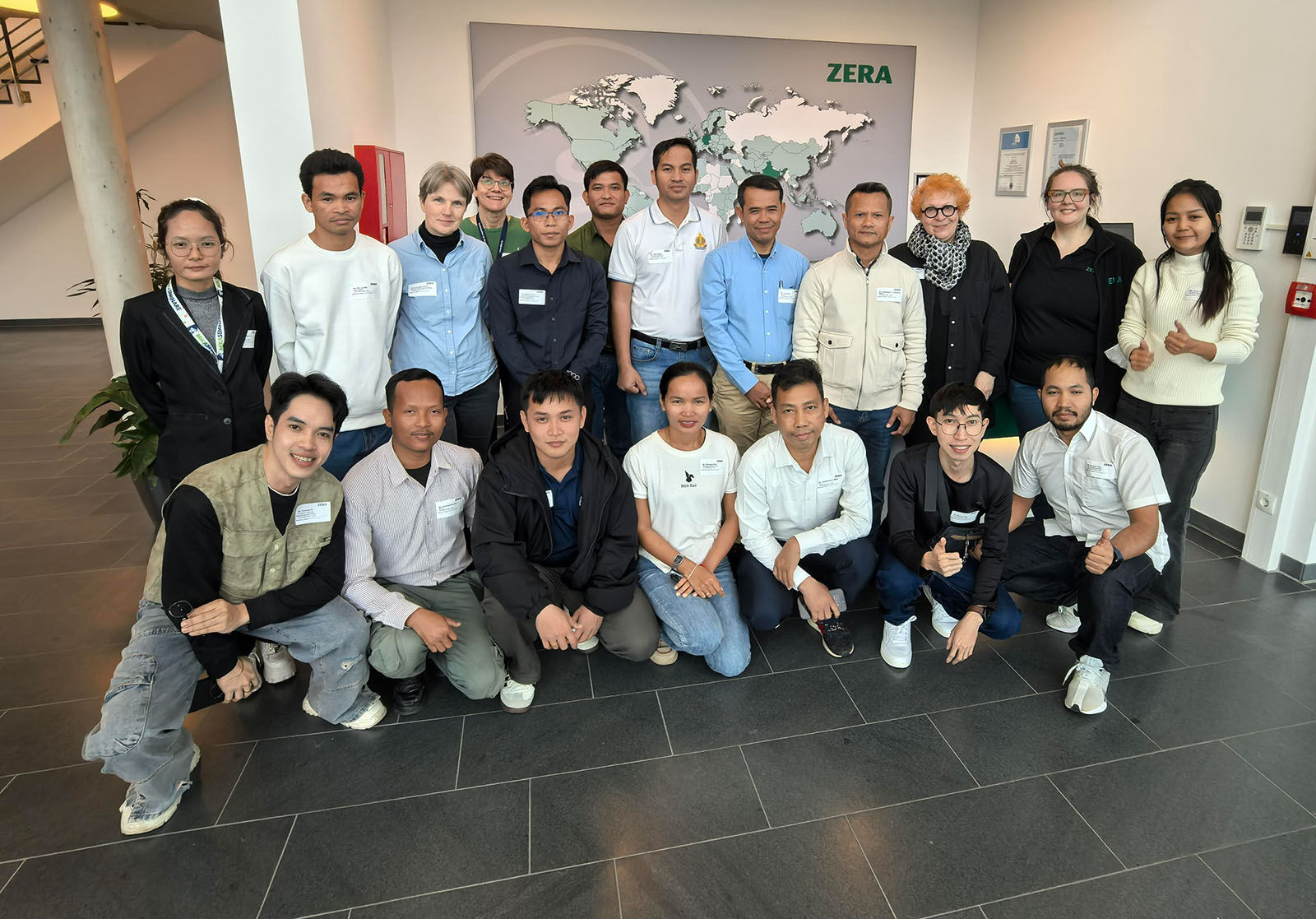
The official kick-off took place on February 9 at the Federal Institute for Vocational Education and Training (BIBB) in Bonn. The guests gained valuable insights into the work of BIBB and the role of training personnel at inter-company and company-based learning venues. Participation in the examination boards of the competent bodies was also discussed. These impressions were deepened by visits to the inter-company training centre of the Koblenz Chamber of Skilled Crafts (HWK), the Rhein-Sieg Chamber of Commerce and Industry (IHK), and the companies Hitachi Energy and ZERA. Conversations with full-time and part-time trainers, as well as with apprentices, made it clear how closely theory and practice can be intertwined in German vocational education and training.
Subsequently, the Hamburg Institute for Vocational Education and Training (HIBB) took over the supervision of the group in the Hanseatic city. During visits to various vocational schools, the focus was primarily on the role of the teachers. Another highlight was the visit to the Vocational University Hamburg (Berufliche Hochschule Hamburg). There, the participants were able to impressively experience how the equivalence of academic and vocational education is lived in practice. The programme was rounded off by lively discussions on teacher training in the commercial and technical sectors at the Hamburg University of Technology (TUHH).
The internship in Germany was more than a tour. It was a structured learning process. It concluded with a dedicated reflection session at BIBB, where participants connected their observations with policy and system development. As Horseng Se, assistant to the Resident Twinning Advisor (RTA) of the Project in Cambodia noted, while the German VET system is strongly shaped by its history and cannot simply be copied, "many practical elements can be adapted to strengthen Cambodia's technical and vocational education". The representative of the IHK Bonn/Rhein-Sieg echoed this, commenting that the "spirit of collaboration shown here paves the way for meaningful adaptations in Cambodia's vocational landscape". Together, ideas were developed on how practical learning can be successfully anchored in Cambodian curricula and what support is needed from the EU consortium to achieve this. Because one thing is clear: new curricula on paper are only the beginning. The decisive factor is the teacher — professionals who are technically strong, who support change, and who bring the lessons to life. There is still a lot of work to be done here.
The project's timeline maps out a clear arc: the 2024 launch was followed by the 2025 development phase, in which revised curricula, textbooks, and a master plan were produced. The year 2026 is dedicated to piloting work-based learning and the European internships for teachers. The final year, 2027, will focus on lessons learned and planning for expansion. By investing in people and fostering such cooperation on an equal footing, the EU-Cambodia Twinning Project perfectly embodies the spirit of the Global Gateway strategy. It is a partnership between peers that promises a lasting impact – by empowering Cambodia’s teachers and thereby driving forward the reform of technical education and enhancing the appeal of vocational training in the long term, thus preparing the next generation of technically competent graduates for the country’s green, digital and equitable future.
Curious to see more? Watch the videos and be inspired by the impressions of this special visit.