Green Skills in Lagos
BIBB supports the training of Green Skills Trainers in Lagos
17.06.2026
Nigeria is in the middle of a green economic transition. Preparing the VET system to meet this demand, BIBB experts trained the first cohort of Green Skills Trainers in Lagos as part of the GIZ Skills and Youth Employment (SKYE) project in Nigeria.
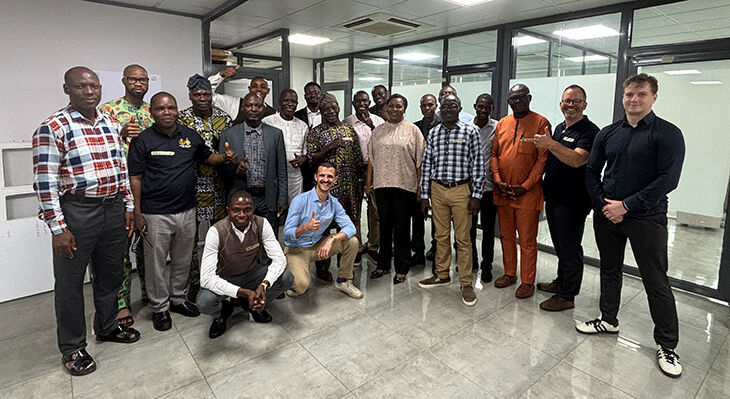
As part of the GIZ Skills and Youth Employment (SKYE) project in Nigeria, BIBB experts from Bonn trained the first cohort of Green Skills Trainers in Lagos — before taking the conversation to the national stage at a TVET conference the following day.
Nigeria is in the middle of a green economic transition. Industries are adapting, occupational profiles are shifting, and the demand for workers with green competencies is growing — in construction, manufacturing, energy, and beyond.
Preparing the VET system to meet this demand requires not only new curricula, but trainers who can deliver them confidently and effectively. In early June, the Federal Institute for Vocational Education and Training (BIBB) took a significant step toward making that happen.
Six Months of Preparation, Two Days of Delivery
Over the past six months, BIBB has been supporting the GIZ SKYE project in Nigeria in adapting a Basic Modular Course on Green Skills for the Nigerian TVET context. The course consists of three chapters:
- efficient use of resources and energy,
- waste management, and
- the proper handling of hazardous substances.
Following the completion of that adaptation work, the time had come to train the first cohort of trainers to deliver it.
On 8 and 9 June 2026, BIBB experts Luca Jelic and Michael Schwarz facilitated a two-day train-the-trainer workshop in Lagos, Nigeria. Eighteen participants from TVET colleges and other training institutions across Nigeria came together to prepare for delivery of the course — a milestone that marks the transition from curriculum development to real-world implementation.
Learning by doing and by teaching – the snowball technique
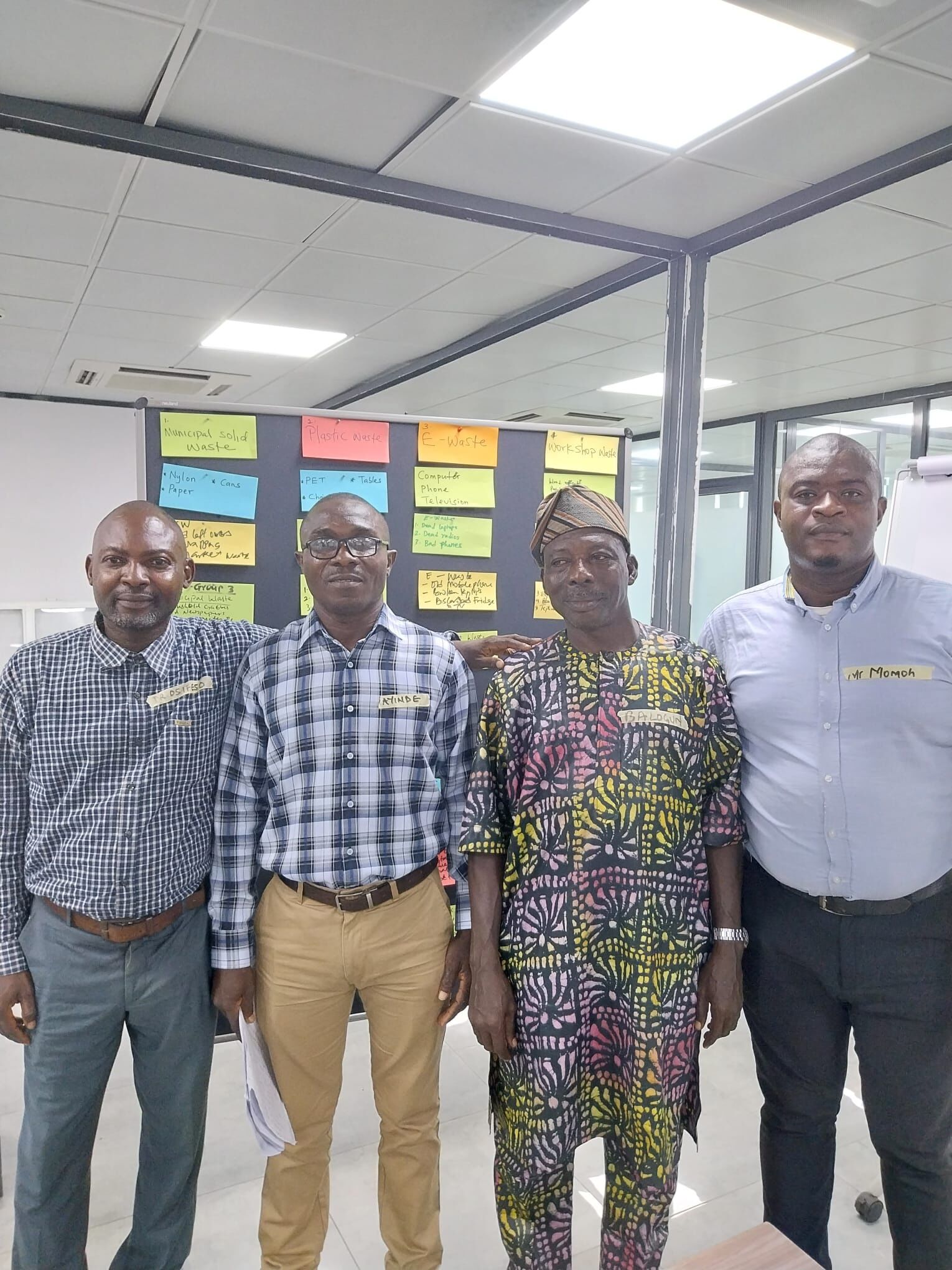
The workshop was deliberately designed around active participation rather than passive instruction. Day one placed participants firmly in the role of learners, experiencing the course methods and exercises first-hand. Day two shifted perspective: participants took on the role of trainers, preparing and delivering short micro-teaching sessions to their peers.
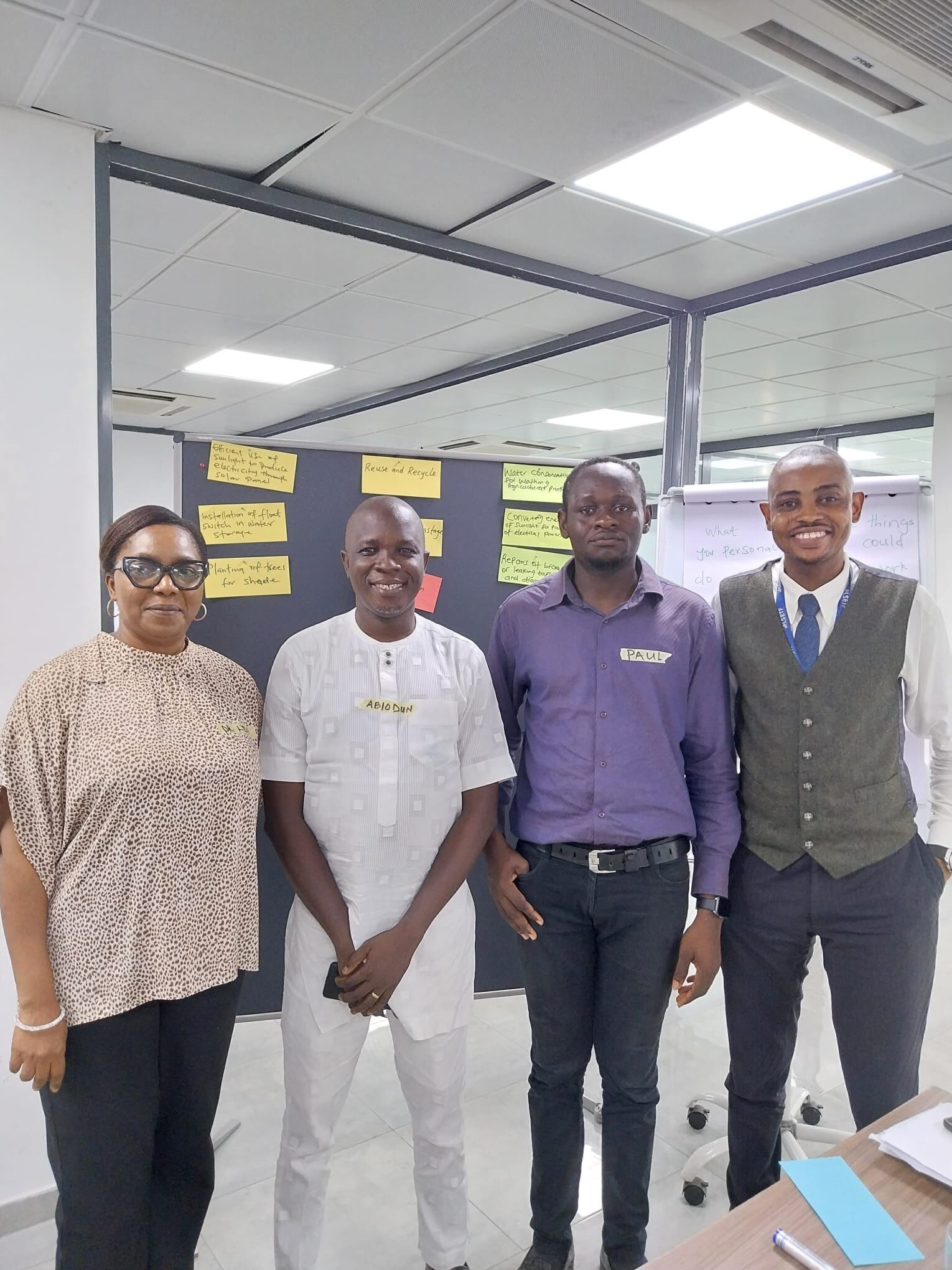
Among the methods practiced was the Snowball technique — a structured group discussion format in which participants first work individually, then in pairs, then in larger groups, progressively building on each other's ideas before presenting to the plenary. Watching the method unfold in a training room in Lagos, it was clear why it had become a highlight of the two days: it generated energy, drew out quieter voices, and produced richer outputs than a conventional group task.
Another highlight was a hands-on exploration of the workshop venue itself. Split into two groups, participants fanned out across the building to assess its energy and water use and its waste management practices. Their findings were concrete and practical — and came with direct recommendations for the GIZ team hosting the event.
"The group was very committed," said Michael Schwarz. "That´s what we wanted to achieve together."
Green Skills on the conference stage
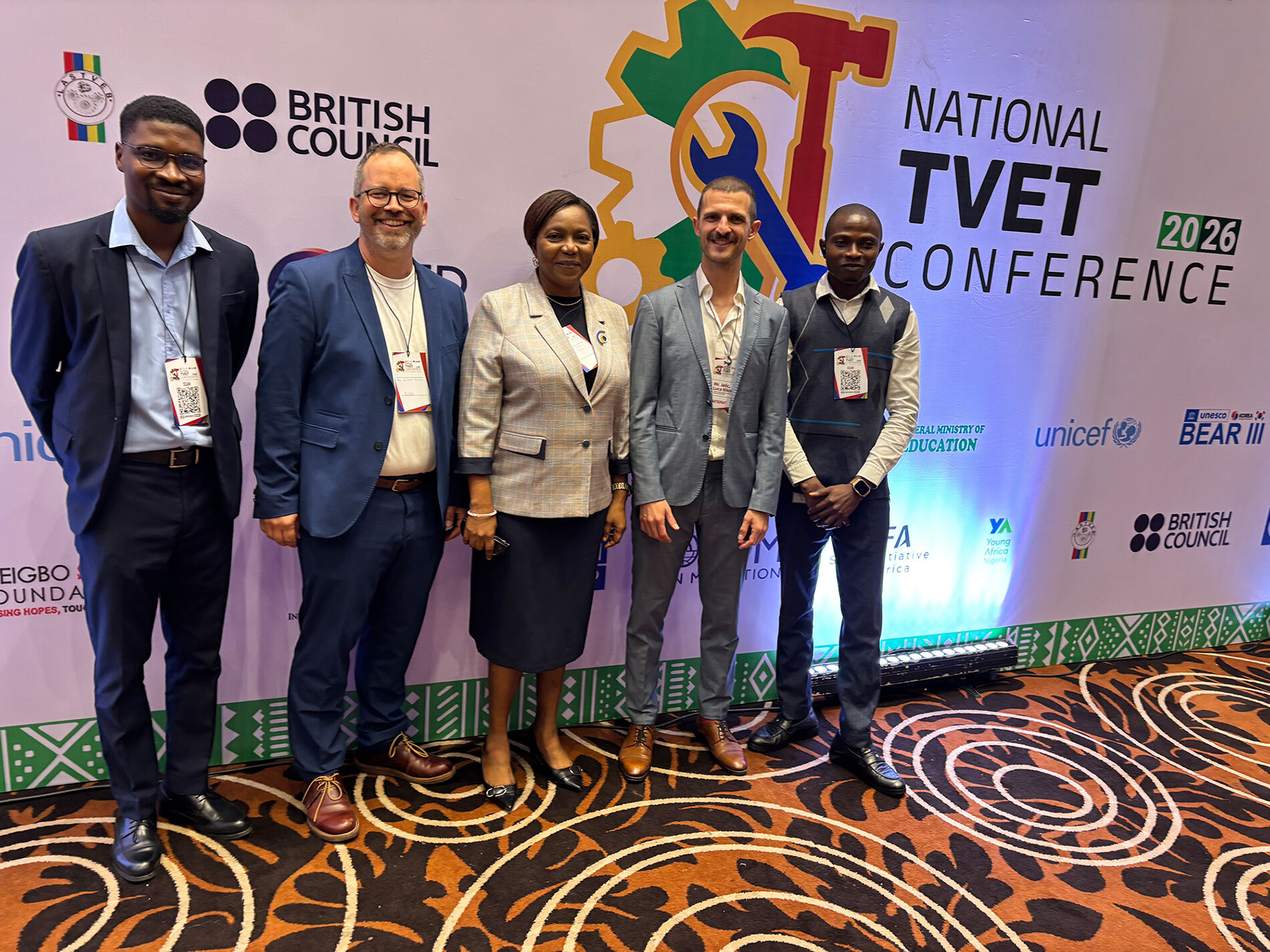
The day after the workshop, four of the newly qualified trainers stepped onto a larger stage. At a session titled "Green Jobs for Inclusive Economic Growth: Trends, Projections and Skill Implications for Nigeria", held as part of a national TVET conference, they participated in a panel discussion on the role of Green Skills in Nigeria's economic future.
The session opened with a short expert input from the BIBB team, covering
- global upskilling and reskilling needs,
- the climate and competitiveness arguments for green skills and
- projections for how occupations are expected to shift in response to the green economy — drawing on German data as a reference point
It followed a presentation of the Basic Modular Course itself.
The panel discussion that followed addressed some of the most pressing questions facing Nigeria's training system:
- Why do Green Skills matter in the Nigerian context?
- How can a course like this be integrated into existing curricula?
- What are the concrete benefits for individuals and companies?
On the question of benefits, panel members were clear: for individuals, green skills improve employability in a labour market where demand for these competencies is rising. For companies, a workforce trained in resource efficiency, waste reduction, and the safe handling of hazardous substances translates directly into improved competitiveness.
On the question of readiness, one panel member summed up the mood with characteristic directness: "We are ready. But we need the right training infrastructure and matching between what we teach and what companies actually need."
Looking ahead: from pilot to national integration
The momentum generated in Lagos is not intended to stay there: The Basic Modular Course on Green Skills is expected to be integrated as a unit of competency into curricula and occupational standards that are currently under review in Nigeria. The planned approach is to begin with a pilot scheme in selected states before scaling to a national rollout — a phased strategy that reflects both the ambition of the programme and the complexity of embedding new content sustainably within an existing system.
For BIBB, the Lagos workshop is part of a longer commitment to supporting Nigeria's TVET system at a pivotal moment. As Green Skills move from policy aspiration to training reality, having well-prepared, confident trainers in place is the essential first step.
BIBB experts are providing advisory services as part of the GIZ Skills and Youth Employment (SKYE) project in Nigeria from September 2025 till October 2026.