From Landfill to Learning Unit: Nigeria’s Waste Experts in Germany
29.07.2026
Fifteen experts from Nigeria’s waste and recycling sector spent two weeks in Bonn and Berlin — visiting landfills, labs and workshops, and starting work on a National Occupational Standard set to professionalise a largely informal sector.
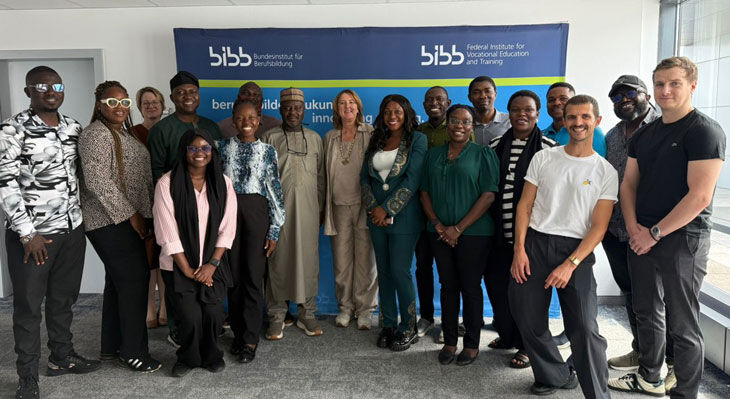
In July 2026, a delegation of fifteen experts from Nigeria’s waste and recycling sector travelled to Germany for a two-week study visit. Organised by BIBB, the Federal Institute for Vocational Education and Training, on behalf of the GIZ programme “Skills Development for Youth Employment” (SKYE II), the trip served a double purpose: to launch the joint development of a National Occupational Standard (NOS) for Recycling and Waste Management Operators — and to see how the sector operates in a country where it has long been formalised.
The delegation was no random selection. Its members form the Technical Working Group (TWG) set up to draft the standard: recyclers and waste-management companies, the National Board for Technical Education (NBTE), the Nigerian Environmental Standards Regulation Authority (NESREA), the Lagos State TVET Board, a waste pickers’ association, and social enterprises working on circularity and green jobs. Public sector, private sector and civil society, in one room.
The reason for their journey is a familiar equation with an unfamiliar answer. Nigeria’s population is young and its cities are growing fast, while its waste sector remains largely informal and under-professionalised. That is an environmental problem — but also an opportunity: thousands of people already earn a living from waste, and formalising their skills could turn precarious work into recognised occupations. A National Occupational Standard is the instrument that makes this possible.
Learning from practice
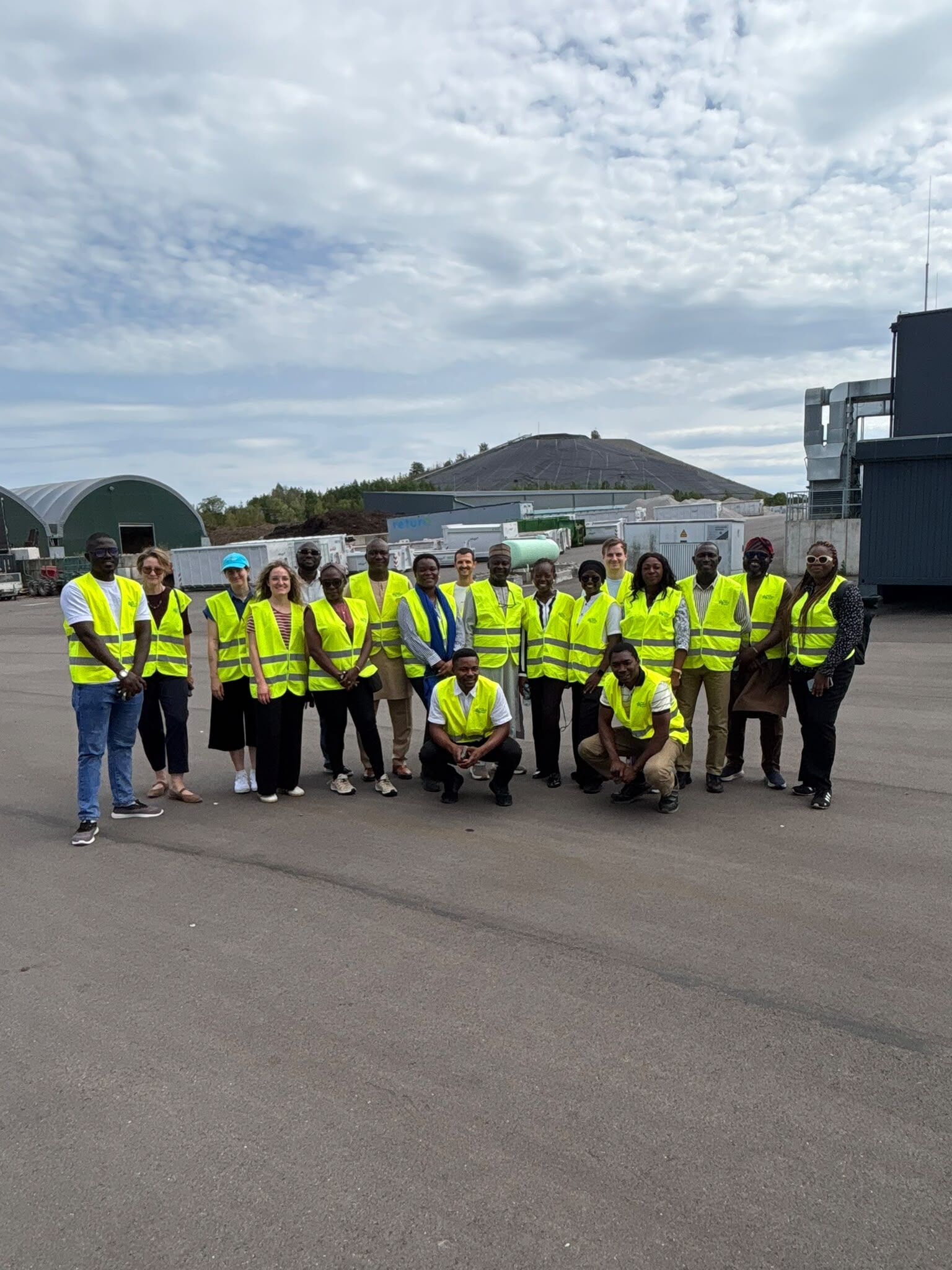
Before drafting anything, the group went to see some waste management examples in practice. At Metabolon in the Bergisches Land, Germany, a decommissioned landfill has been transformed into a site combining waste treatment, research, education and recreation. What struck the delegation was less the technology than the logic behind it: resources extracted from incineration, community engagement giving the site a second life, and government-led action sustained over decades.
“We’re 6,000 km apart and still it’s fascinating to see that we are working on the same questions: How do we make circular economy more efficient? How do we solve our sector’s most crucial challenges. I really enjoyed the exchange on eye level.”
Elena Eßer, Metabolon
_rdax_80p.jpg)
The visit to Rhein-Sieg-Abfallwirtschaftsgesellschaft (RSAG) in Siegburg, the locally responsible waste management company, added the business perspective — integrated waste management in practice, organic waste treated as a resource, wastewater and gas recovery, and a company that trains its own apprentices.
Innovation and circular design
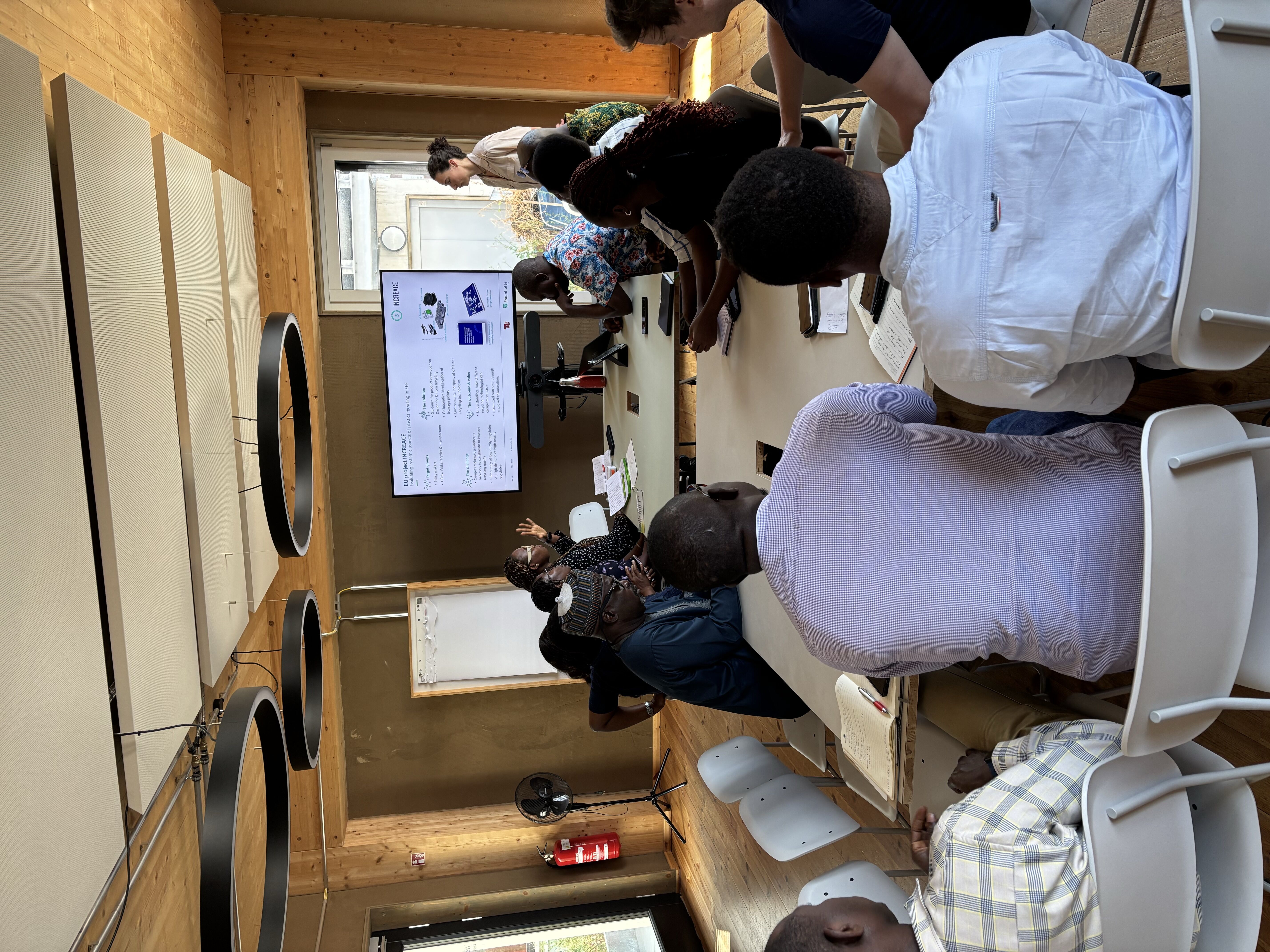
In Berlin, the delegation met the Fraunhofer Circular Design Lab at Impact Hub, with inputs on circular design, repairability assessment and plastic loops from electronic waste. Two lessons resonated: that eco-design translates into measurable CO₂ efficiency, and that innovation needs an ecosystem — long-term entrepreneur support, not one-off projects.
Further stops rounded out the picture from both ends of the scale. At Bauhaus Earth, an initiative conducting applied research on regenerative and circular construction, the conversation turned to circular construction and the practical obstacle that new materials require new processes and new skillsets — a reminder that green transition is, in the end, a training question. At the House of Materialisation, the group encountered circularity from the bottom up: a second-hand hardware store, open workshops, and a plastic-moulding initiative whose techniques were immediately recognisable to several delegation members. Circular approaches, as one participant noted, do not only come top-down.
The actual work
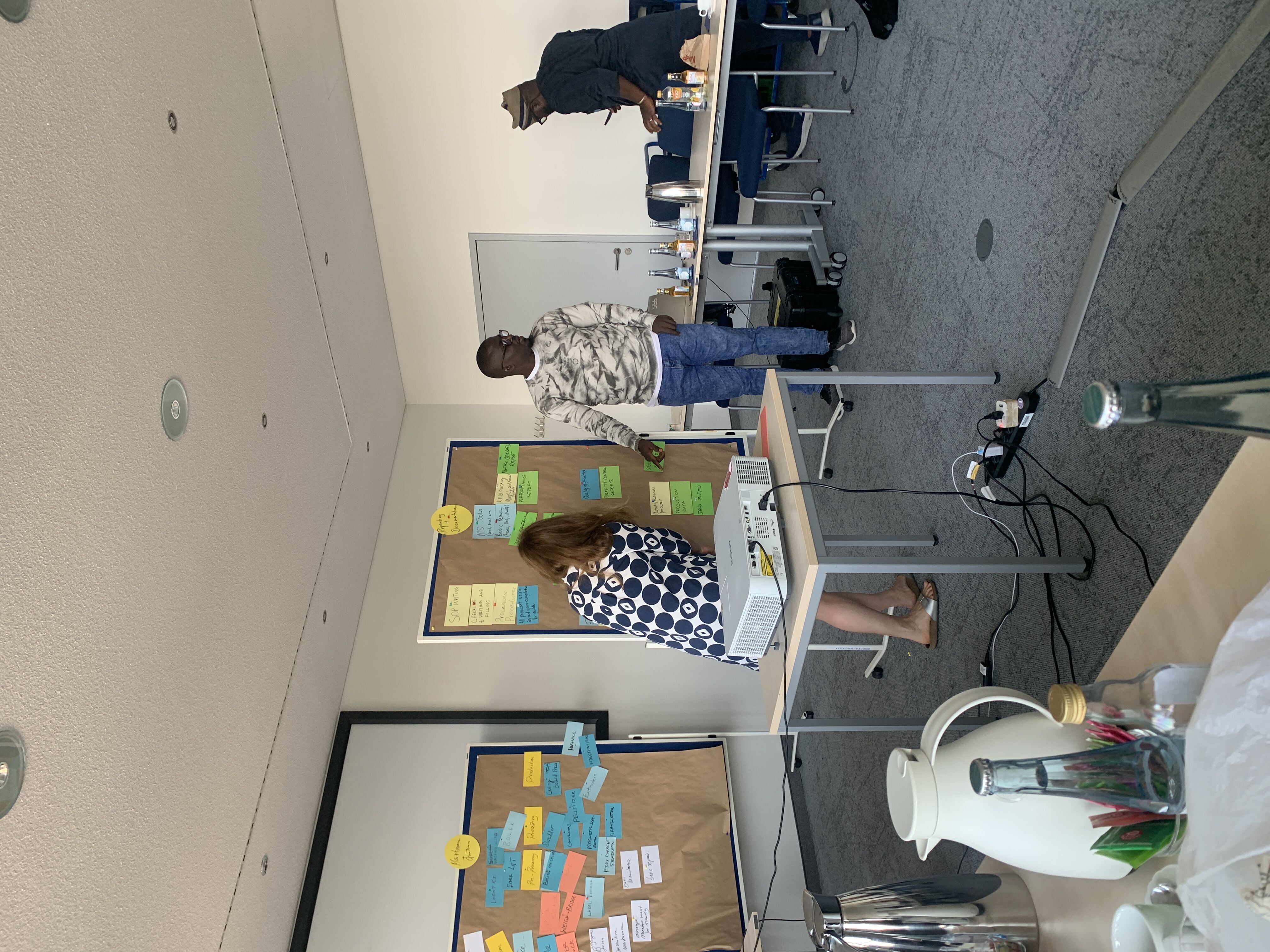
Between the site visits sat the core of the trip: 1.5 days of standard development at BIBB. Working sessions, facilitated by a firm and inclusive BIBB-expert, moved from real business processes in the Nigerian waste sector towards a first structure for the standard. The method was time-intensive — but it ensured that every perspective in the room was heard.
A presentation by Dr. Hassan Akande of NBTE made the comparison explicit. Nigeria develops standards and learning units sequentially by level; Germany integrates all levels into a single 3.5-year training programme.
“Although the German approach to developing occupational standards differs from the Nigerian one, they share the same goal: a training system that is relevant for the labour market and tailored to industry needs.”
Dr. Hassan Akande, NBTE
What comes next
At the closing reflection workshop, the group agreed on a working mode for the months two come. The participants summed up the two weeks as challenging and rewarding in equal measure. One shared conviction ran through the trip from the first day: the standard should not simply “fit well into the drawer”, but be relevant and operational for the people who will use it. The study trip was an important step towards that goal.
All stops of the study visit
- 06 July - Bonn, Welcome and reception at BIBB
- 07 July - Workshop at GIZ and visit to Metabolon
- 08 July - Visit to RSAG and workshop at BIBB
- 09–10 July - Standard development at BIBB and Haus der Geschichte
- 11–12 July - Leisure / sightseeing and transfer to Berlin
- 13 July - Impact Hub & Fraunhofer Circular Design Lab
- 14 July - Bauhaus Earth and OSR Recycling Group
- 15 July - House of Materialisation
- 16 July - Reflection workshop and departure