Industry Partnerships, Innovation and AI: International Impulses for TVET
04.08.2026
How can TVET systems become more resilient and future-ready through strong industry partnerships, work-based learning and digital innovation? The event Advancing TVET through Industry Partnerships and Innovation, organised by UNESCO-UNEVOC and BIBB as part of the German Federal Ministry's Towards a Global TVET Agenda (TGTA) initiative, provided valuable insights and practical approaches—not only for South Africa the host country, but for the wider international TVET community.
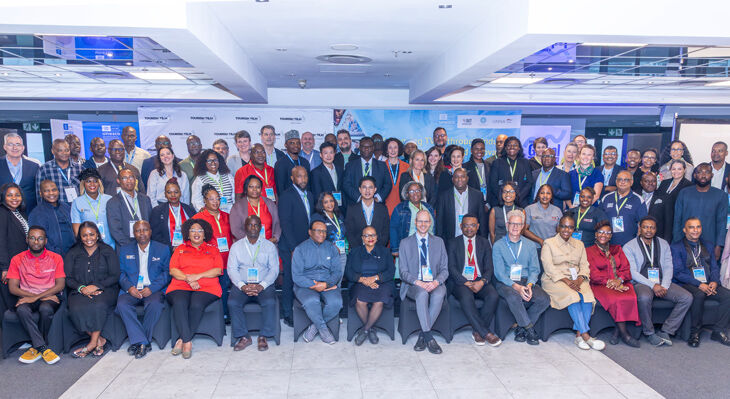
From 19 to 21 May 2026, international representatives from governments, TVET institutions, academia, industry and multilateral organisations gathered in Umhlanga, South Africa, to explore how close collaboration with industry can drive innovation in Technical and Vocational Education and Training (TVET). The BILT Bridging Event was organised by UNESCO-UNEVOC together with the University of South Africa (UNISA), the Durban University of Technology (DUT), JET Education Services and BIBB as part of the “Towards a Global TVET Agenda” (TGTA) initiative.
The event provided a platform to connect global discussions on TVET with the priorities of the African Continental TVET Strategy 2025–2034 and ongoing TVET reforms in South Africa. For BIBB, it also provided an opportunity to highlight the objectives of the BMBFSFJ's initiative in the African context and to further strengthen dialogue with key regional stakeholders. Central objectives of the TGTA initiative were at the heart of the discussions: strengthening high-quality and inclusive TVET, promoting work-based learning, and fostering international exchange on reforms and innovation in TVET systems.
TVET as a Driver of Economic Transformation and Employment
Right from the opening session, it became clear that TVET is increasingly recognised worldwide as a strategic lever for navigating economic, technological and societal transformation. Representatives of the African Union Commission (AUC), UNESCO-UNEVOC and the South African host institutions emphasised the importance of labour market-oriented skills, strong industry partnerships and greater societal recognition of TVET.

Chigozie Emmanuel Okonkwo, Education and Skills Advisor at the African Union Commission, summarised the importance of TVET for the African continent:
"Africa needs strong TVET systems. If we want to create inclusive growth, decent jobs and a competitive industry that provides real opportunities for young people, we must give greater attention to vocational education and training. TVET is central to Africa's development, to the 2030 Agenda, and, above all, to the future of young people."
Chigozie Emmanuel Okonkwo, Education and Skills Advisor at the African Union Commission
A common understanding ran through the discussions of the first day: TVET can only realise its full potential for employment, economic development and social inclusion when it is closely aligned with labour market needs.
Several interactive workshops focused on how sustainable partnerships with industry can be translated into practice. Participants explored the GAN Global Guide for Quality Apprenticeships and Return on Investment, the South African TVET-Industry Roadmap, and a practical guide developed by the Donor Committee for dual Vocational Education and Training (DC dVET) on systematically engaging the private sector. The workshops demonstrated practical approaches to transforming ad hoc cooperation into long-term strategic partnerships.
Innovation Ecosystems as Drivers for Modern TVET
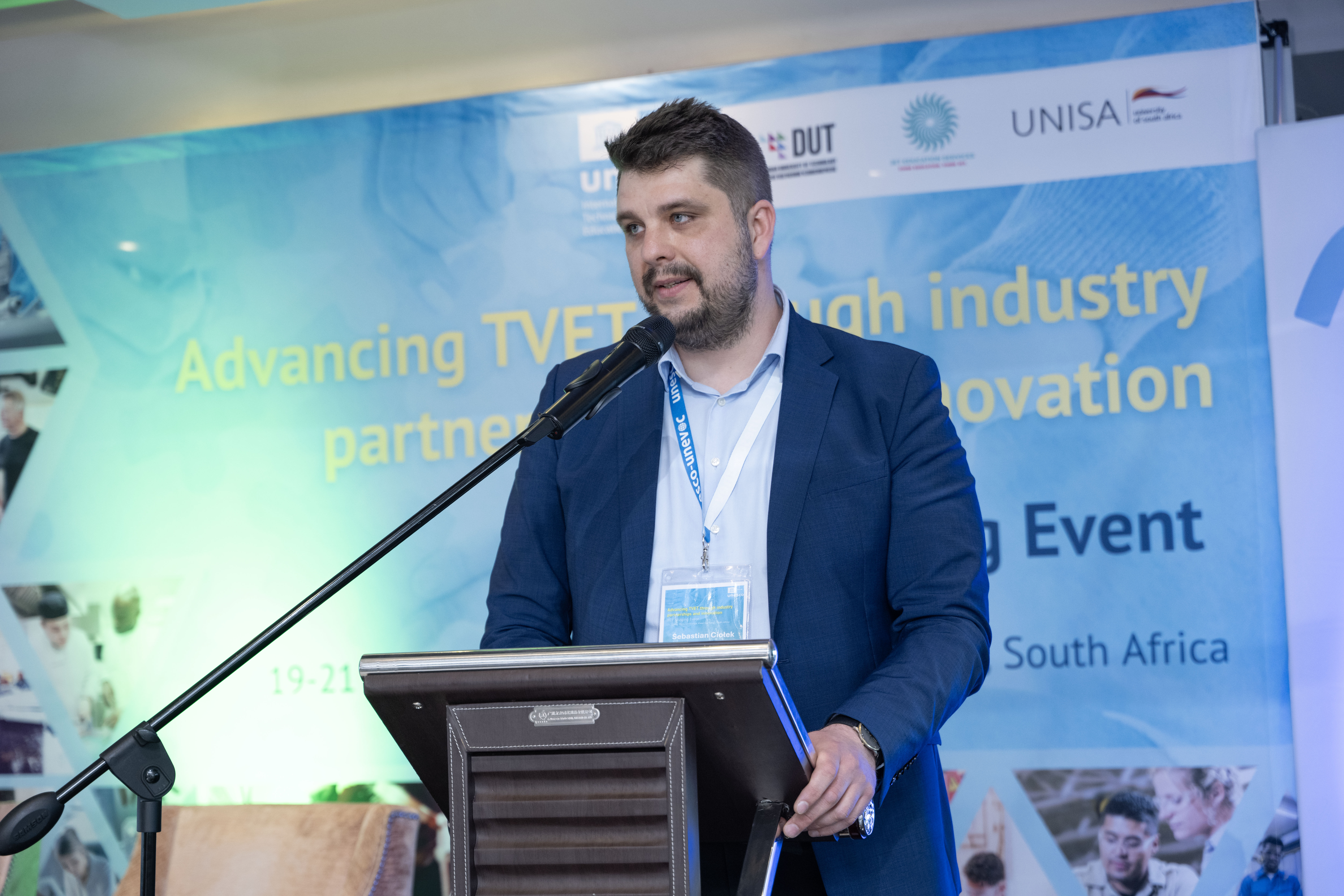
Another key theme of the first conference day was the role of TVET institutions within regional innovation ecosystems. In a session moderated by Sebastian Ciołek (BIBB), experts from Europe and Africa discussed how TVET providers can strengthen regional innovation and skills development through closer collaboration with industry, research institutions and policymakers.
Among the initiatives presented were the French Campus des Métiers et des Qualifications, the European Centres of Vocational Excellence (CoVE) initiative, and South Africa's Centres of Specialisation. Despite their different institutional contexts, all three examples highlighted similar success factors: long-term cooperation, shared strategic objectives, and strong links between education, industry and regional development.
The discussion clearly demonstrated that TVET institutions are increasingly evolving beyond their traditional role as training providers. They are increasingly evolving into active drivers of regional innovation and transformation.
From Strategy to Practice: Work-Based Learning in Focus
The second day of the event focused on the practical implementation of work-based learning. Representatives of South African TVET colleges shared their experiences in building partnerships with local companies, introducing labour market-relevant qualifications, and integrating workplace learning into college-based training programmes.
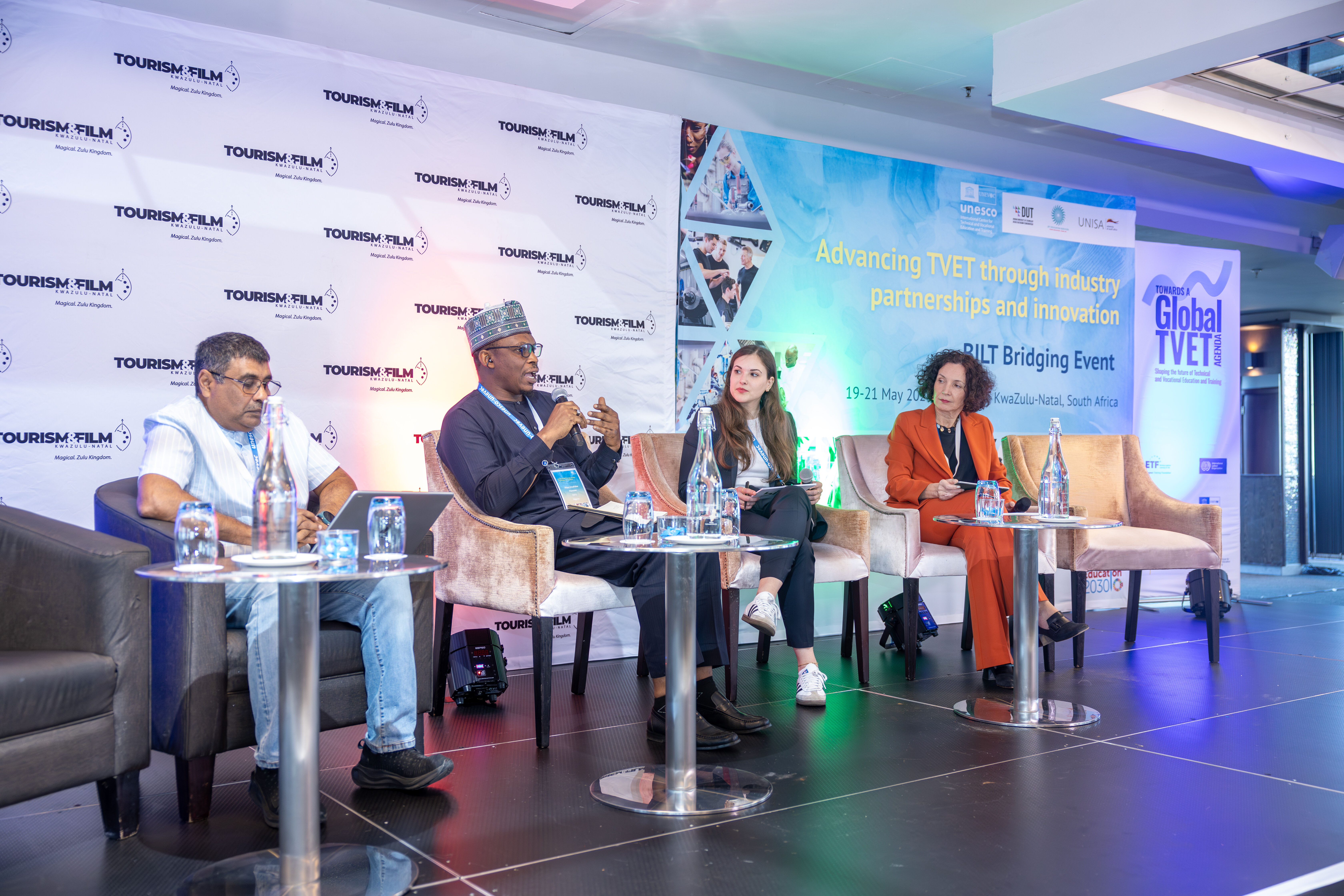
International perspectives complemented the discussions. In a panel moderated by Cara Schmitt (BIBB), experts from Africa and Europe explored how successful approaches to work-based learning can be embedded sustainably in TVET systems beyond individual pilot projects. The session featured:
- the African Master Trainers Network for work-based Learning, implemented by the International Labour Organization (ILO) as part of the TGTA initiative;
- UNIDO’s ZAMITA project in Zambia, promoting public-private partnerships;
- the ECOWAS Young Graduate Immersion Programme; and
- approaches to quality assurance and the system design of work-based learning developed by TU Dortmund University.
The discussions highlighted that the sustainable integration of work-based learning requires long-term partnerships, strong intermediary institutions, robust quality assurance mechanisms, and continuous dialogue between education providers, industry and policymakers. Work-based learning was understood not as an additional component, but as an integral part of modern TVET systems.
Particular interest was shown in the German dual apprenticeship system. The Chamber of Skilled Crafts Ostwestfalen-Lippe in Bielefeld explained the role of chambers as intermediaries between the education system and the labour market, as well as their contribution to quality assurance and support for training companies.

Insights into South African TVET Colleges
One of the highlights of the second conference day was a series of study visits to TVET colleges across KwaZulu-Natal.
Participants gained first-hand insights into training programmes in manufacturing, electrical engineering, agriculture, tourism and renewable energy. The visits highlighted the close cooperation between colleges and industry, the continuous adaptation of qualifications to meet regional labour market needs, and the growing use of digital teaching and learning technologies.
Beyond showcasing modern training facilities, the visits demonstrated how South African TVET colleges are responding to changing economic demands by working closely with employers and continuously adapting their programmes to regional skills needs. For many participants, the visits provided valuable practical insights into the opportunities and challenges of implementing industry partnerships and work-based learning in different institutional contexts.
Digitalisation, Artificial Intelligence and Flexible Learning Pathways
The third day of the event focused on how TVET systems can respond to digitalisation, artificial intelligence (AI) and evolving skills requirements.
In a joint keynote presentation, Dr Gesa Münchhausen (BIBB) and Dr Helen Brown (Tshwane University of Technology) presented initial findings from a comparative study on the integration of AI into TVET systems in Germany, South Africa and South Korea. Their central finding was clear: AI is fundamentally reshaping occupations, skills requirements and learning processes, posing new challenges for TVET systems worldwide. At the same time, the findings underline that successful AI integration extends well beyond technological considerations or issues. It requires effective governance structures, well-qualified teaching staff, modern curricula and equitable access to digital infrastructure. The analysis also highlighted the importance of evidence-based policymaking and international knowledge exchange in shaping digital transformation.
Another key focus was on flexible learning and qualification pathways. In a panel moderated by JET Education Services, international experts discussed the growing role of micro-credentials, with particular attention to quality assurance, recognition and integration into existing qualifications frameworks. The discussion highlighted the South African PoMiSA (Polytechnic and Occupational Micro-Credentials in Southern Africa) initiative, which is developing innovative approaches to flexible, labour market-oriented learning opportunities.
International Cooperation as the Foundation of a Global TVET Agenda
For BIBB and its international partners, the event confirmed that high-quality, sustainable and inclusive TVET systems can only be further developed through international cooperation and mutual learning.
This is precisely where the Towards a Global TVET Agenda (TGTA) initiative comes in. It brings together the complementary expertise of UNESCO-UNEVOC, the International Labour Organization (ILO), the Organisation for Economic Co-operation and Development (OECD) and the European Training Foundation (ETF) to jointly develop a global agenda for TVET.
UNESCO-UNEVOC's regional events contribute directly to the TGTA initiative by strengthening multilateral cooperation, promoting global knowledge exchange and policy dialogue, and supporting evidence-based policymaking. Together, these efforts are helping to shape the future of TVET on a global scale.