Making VET sustainable
Specialist conference on international vocational education and training cooperation
06.10.2026
Digitalisation, climate change, and ensuring a supply of skilled workers are all presenting many countries with similar challenges. Around 120 experts discussed at BIBB how international cooperation in VET can produce solutions – and why Germany should learn more from abroad in this context.

Entitled “Structuring international VET together”, the specialist conference attended by around 120 representatives from federal ministries, federal states, social partners, chamber organisations, implementing organisations, and other stakeholders in international VET cooperation took place on October 1 at the Federal Institute for Vocational Education and Training (BIBB) in Bonn. Organised by GOVET, the conference’s international VET cooperation (iBBZ) presentations centred on structuring key transformation topics – from digitalisation and artificial intelligence, climate change, the energy transition and sustainability, to ensuring a supply of skilled workers. GOVET project manager Julia Olesen guided the audience through the programme.
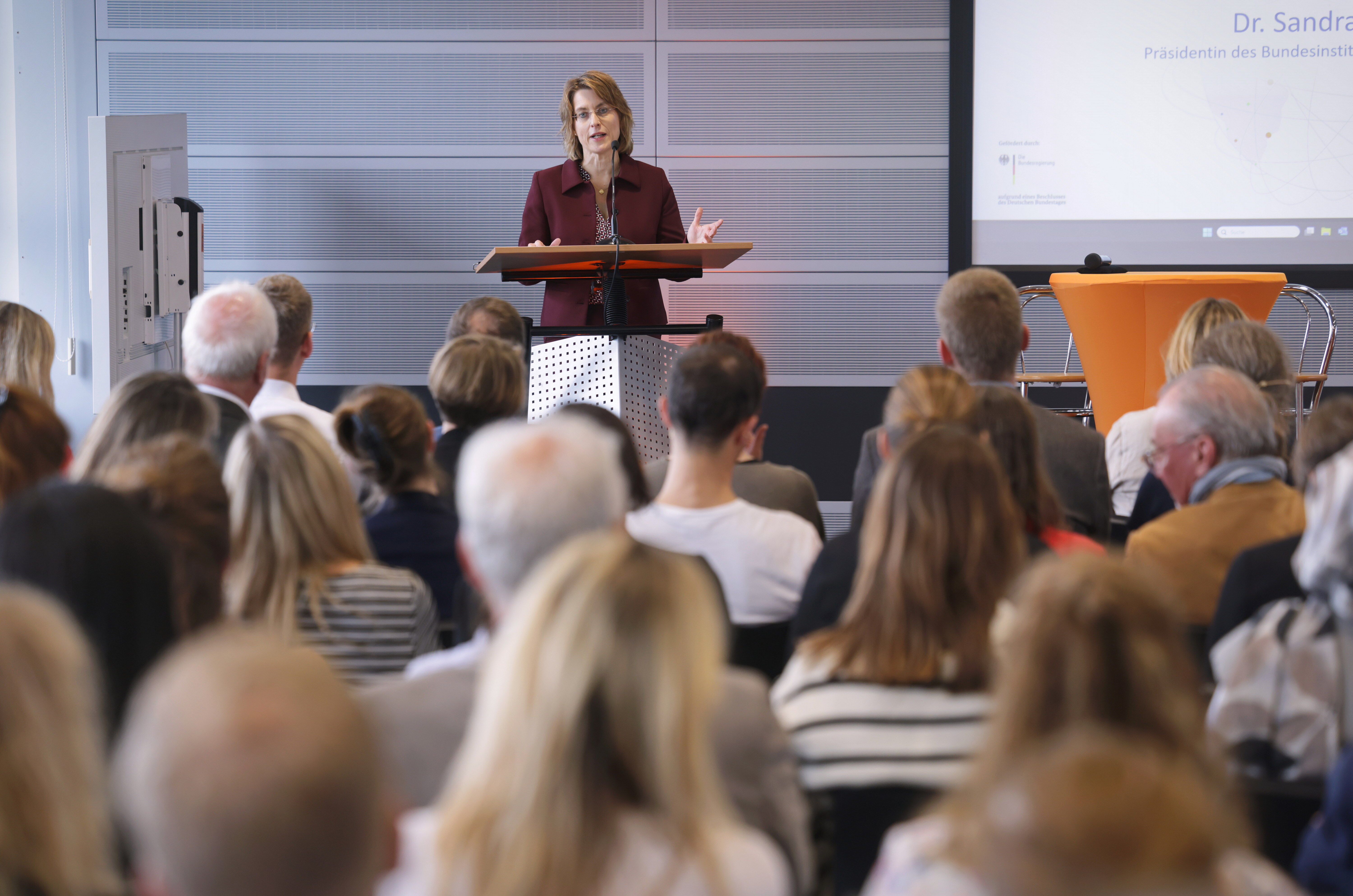
Vocational education and training as a joint structural task
The specialist conference was opened by BIBB President Dr Sandra Garbade, and Stefan Schneider, Head of the Erasmus, International Cooperation in Vocational Education Division at the Federal Ministry for Education, Family Affairs, Senior Citizens, Women and Youth (BMBFSFJ).
In her welcoming speech, Dr Sandra Garbade focused on the importance of mutual learning and international exchange for the further development of vocational education and training.
Many of the current challenges, such as demographic change and increasing demand for skilled workers as a result, digitalisation and artificial intelligence, and ecological transformation are not just relevant in Germany. “International cooperation and collaboration help further develop the VET system. We need to find solutions together,” Dr Garbade emphasised. “International cooperation is not a one-way street. We contribute our experiences and look at the countries and their particular challenges. And what becomes very clear is that we are dealing with similar questions and, when this dialogue is successful, that is the core of good international cooperation,” she said.
She also addressed the topic of economic migration and highlighted that VET needs to remain attractive, versatile, compatible, and applicable to various education histories, “regardless of whether you went to school in Germany and have initial job experience or whether you trained abroad.”
At BIBB, says Dr Garbade, this international perspective is a substantial part of the work across all divisions. International work takes place alongside BIBB’s other activities and is connected to research, regulatory work, policy consultation, and transfer.
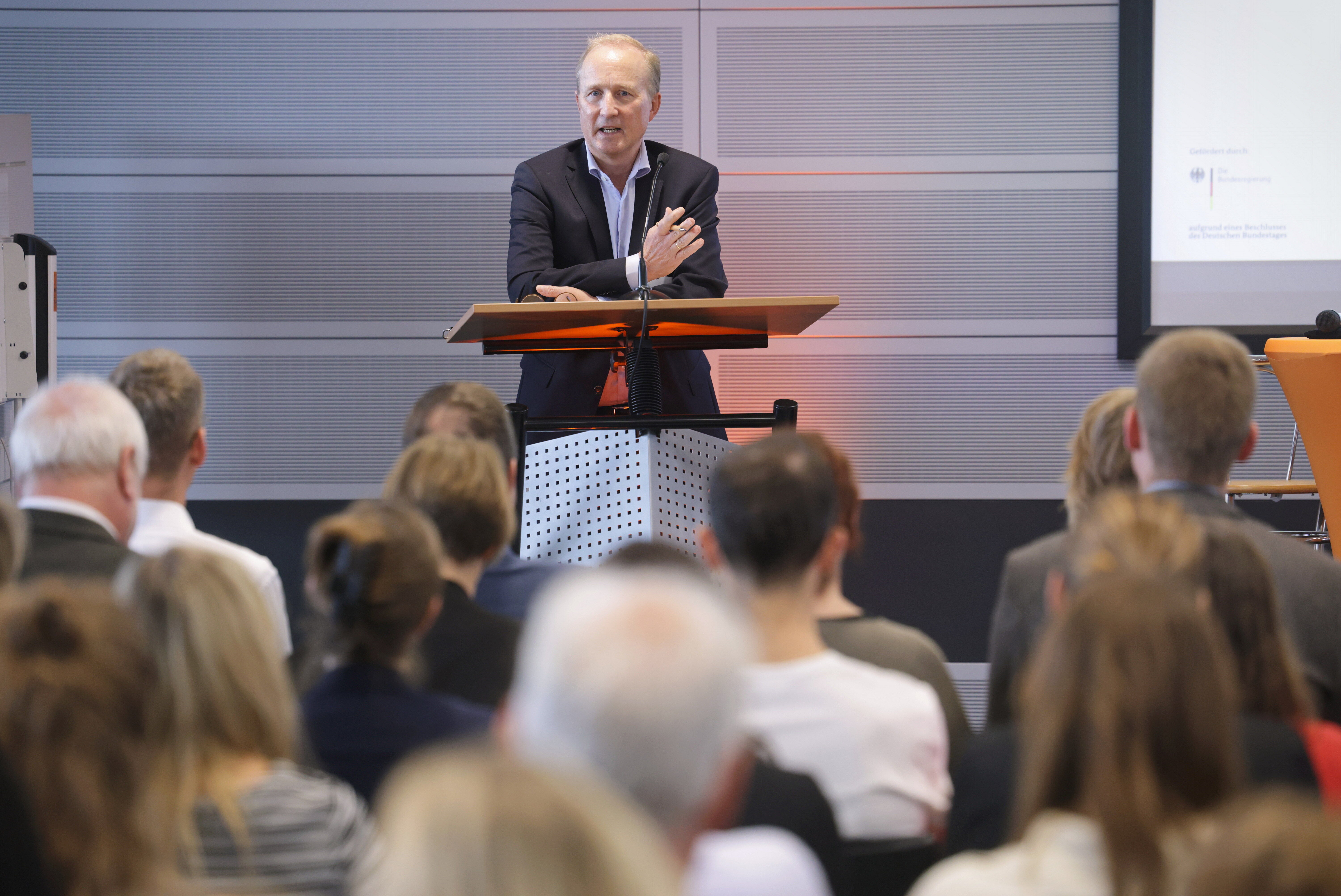
Stefan Schneider, Head of the International VET Cooperation Division, contextualised the specialist conference from the BMBFSFJ’s perspective regarding current developments in international VET cooperation (iBBZ). He mentioned the ongoing further development of the federal government’s strategy on international vocational education and training cooperation. He reported that the involved federal ministries were currently checking and discussing an update of the strategy regarding the topic of skilled worker immigration.
Schneider noted that his division has been looking at the question “how can we conceptually combine iBBZ, skilled workers and skilled labour recruitment in a more integrated and connected way without endangering the brand identity of established iBBZ?” for some years.
He likewise emphasised the significance of learning from one another in VET cooperation. He believes it is important to allow more experiences from international projects to flow back into German policy and practice, and to better conceptually combine international VET cooperation and VET in Germany.
The opening contributions sent a clear message: International VET cooperation thrives on dialogue and combining the experiences of various countries, institutions, and stakeholders. The specialist conference provided a joint platform for this.
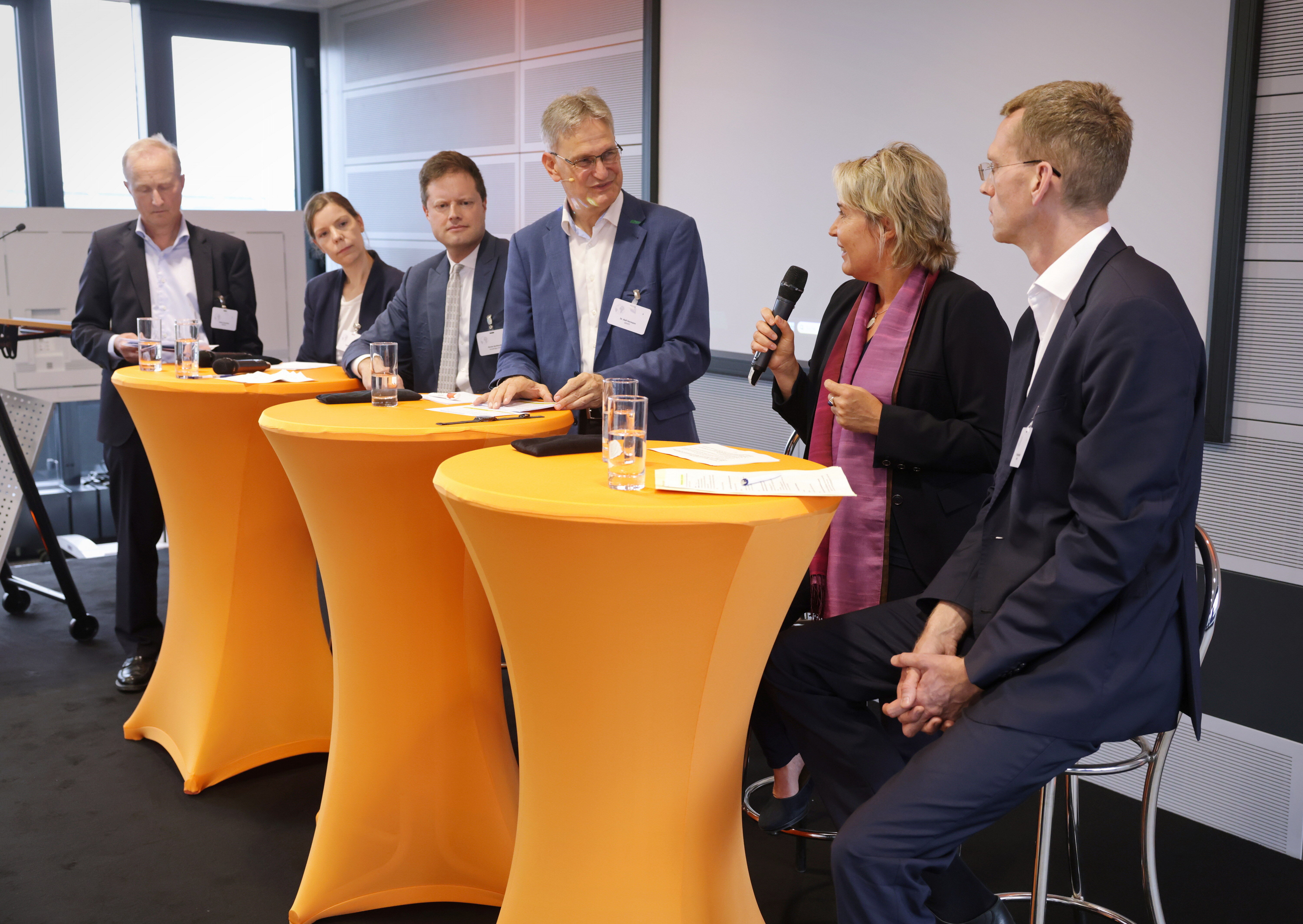
Diverse perspectives on international VET cooperation
As the specialist conference continued, various political, scientific and practical perspectives took centre stage. In a panel discussion, representatives of the Federal Foreign Office (AA), the Federal Ministry for Economic Affairs and Energy (BMWE), the Federal Ministry for Education, Family Affairs, Senior Citizens, Women and Youth (BMBFSFJ), the Federal Ministry of Labour and Social Affairs (BMAS), and the Federal Ministry for Economic Cooperation and Development (BMZ) presented current regional and topical focuses of their international VET cooperation. The group demonstrated that VET is and remains a key issue for international relations. For thirteen years, iBBZ have been exemplary in showing how closely and effectively ministries and implementation stakeholders can work together. The experiences should be used and further developed so as to integrate new topics and to shape effective VET diplomacy, even within a changed international structure.
The VET Slam then provided insights into BIBB’s current VET research topics, with presentations on artificial intelligence, continuing vocational education and training, and digital learning provision. During the Warp Conference, international VET cooperation stakeholders presented specific projects and collaborations from different countries and regions.
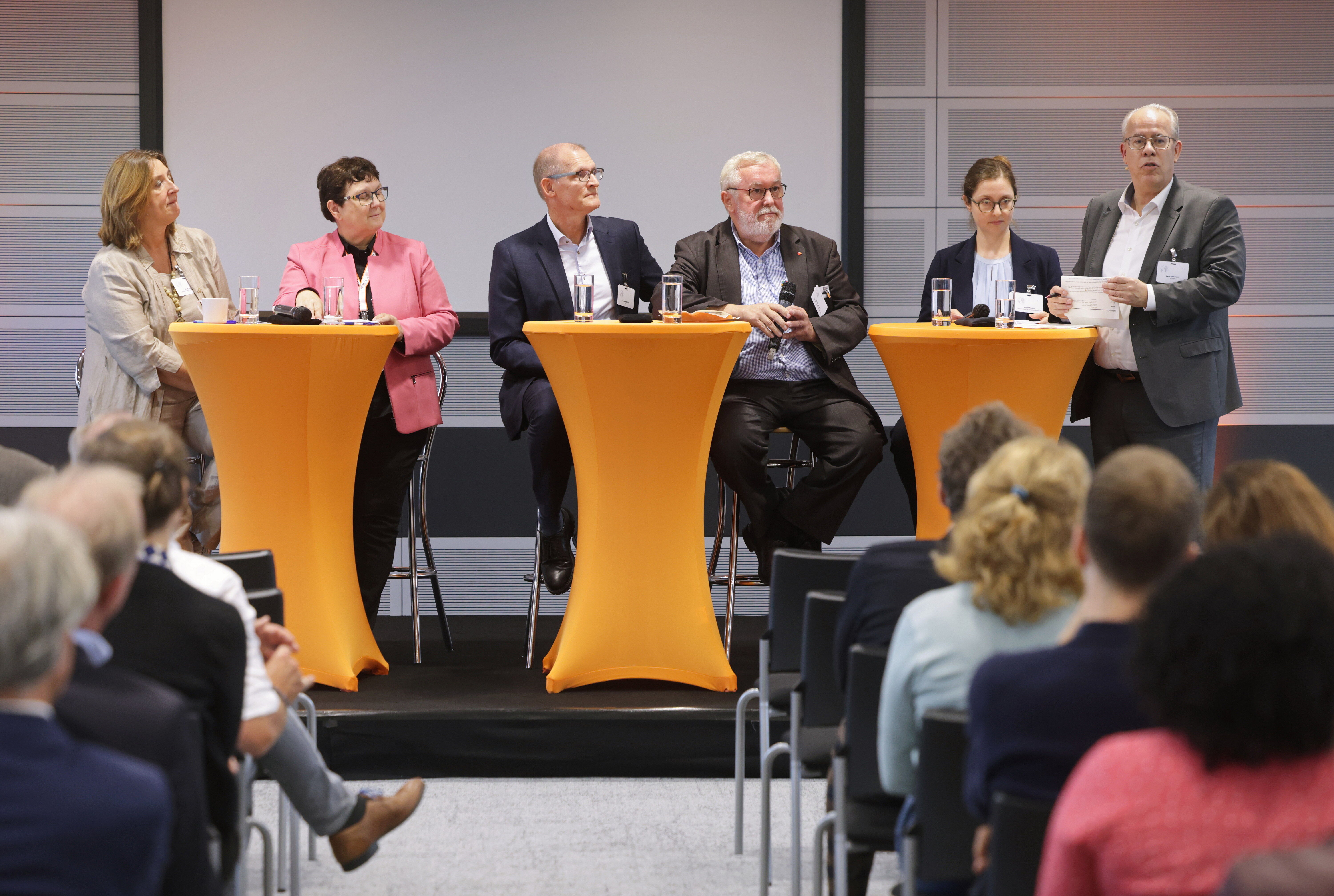
A panel discussion with representatives from BIBB, the German Trade Union Confederation (DGB), the German-Baltic Chamber of Commerce in Estonia, Latvia, Lithuania (AHK), GIZ (Germany’s development agency), and the German Confederation of Skilled Crafts (ZDH) looked at upcoming challenges. Future topics of international VET cooperation and the question as to how politics, science, business, social partners, and implementing organisations can continue to advantageously combine their different perspectives were at the heart of the discussions. Regarding the topic of skilled worker immigration, Birgit Thomann, Head of the Department VET International at BIBB, highlighted the importance of recognising vocational qualifications in connection with skilled worker immigration.
To conclude, Dr Ralf Hermann, Head of GOVET, summarised the key input and results of the conference.
A more detailed report on the individual conference programme points is available on the GOVET-Website.