Dual VET as the key to Rwanda’s pharmaceutical and biotechnology sector
Dual VET as the key to Rwanda’s pharmaceutical and biotechnology sector How can dual VET be used to build a high-performing pharmaceutical and biotechnology industry in Rwanda? A study visit to Germany and Switzerland provided insights into proven training models, quality assurance and cooperation between industry and education.

The nine-day study visit to Germany and Switzerland provided insights for the Technical Advisory Group (TAG) for TVET in the Pharmaceutical and Biotechnology Sector in Rwanda into the vocational education and training systems in the relevant industries of the two countries. Whilst the German part of the program focused on issues relating to cooperation with decision-makers in politics and government and the coordination of committee work in VET, the Swiss leg involved visits to companies in the pharmaceutical and biotechnology industries to learn how the trainees are not only trained in their professions, but supported as a long-term investment into the future talents and work force for the entire sector.
The visit began at the Rwandan Embassy in Berlin. During discussions with the Rwandan Ambassador, H.E. Igor César, the group explored ways in which the Embassy could support TAG in building networks with German stakeholders, strengthening economic cooperation between the two countries, and developing vocational training programs for the pharmaceutical and biotechnology sector in Rwanda.
Campus Buch as a benchmark for a bioeconomy hub in Rwanda and start-ups in the life sciences industry
Rwanda is currently establishing the ‘Rwanda Bioeconomy Hub’ as well as the bioeconomy and life sciences sector for start-ups. The visit to Campus Buch at the Berlin BioScience Academy (BBA) gave the group an insight into how the individual elements form a functioning ecosystem.
The group discussed key aspects of a life sciences ecosystem with Dr Uwe Lohmeier, Head of the Berlin BioScience Academy (BBA), and Dr Christina Quensel, Managing Director of Campus Berlin-Buch GmbH (CBB).
This was followed by an in-depth discussion with Dr Mark Thomet, co-founder and managing director of the Berlin-based consultancy Excellere LifeScience Consulting GmbH, on the topic of entrepreneurship in biotech.
One of the main foci of the group constituted the topic of GMP certification – particularly with regard to content, structure, international recognition, quality assurance and general practical training in cleanroom techniques – topics that were covered int the exchange with Dr Michael Buchholz from the Berlin-based biotechnology company Immutep GmbH.
The group reflected on the enabling conditions for successful start-up development with Dr Levent Akyüz, Vice President of Project Development and co-founder of the campus-based company CheckImmune GmbH.
“A biocampus like this enables young researchers and start-up entrepreneurs to network with established experts and companies in one place. This promotes the development of the entire sector.”
Dr Uwe Lohmeier, Head of the Berlin BioScience Academy
The group furthermore had the opportunity to discuss TÜV SÜD’s certification approaches with Robert Szabo, International Business Development Manager – Certification of Persons at TÜV SÜD Academy. The background to this is the development of a quality label for course programs in the fields of pharmacy and biotechnology (“Endorsed by Phara Rwanda”) tailored to the Rwandan context.
Steering education and training for professionals in the pharmaceutical/biotechnology sector in Rwanda
The TAG was founded in May 2026, modelled on the BIBB's main board. Its purpose is to steer vocational education and training in Rwanda for the pharmaceutical and biotechnology sectors. Its members comprise the managing directors of private-sector international or internationally active companies in the pharmaceutical and biotechnology sectors in Rwanda, as well as senior management from state (educational) institutions and regulatory authorities.
What are the potential opportunities and challenges of the BIBB's main board from the perspectives of employees and employers, and what lessons can be drawn from this for the TAG’s own work? The TAG was able to analyse these questions at the German Trade Union Confederation (DGB) in Berlin during a meeting with Thomas Giessler, Head of the Vocational Training Policy Division, and later on in Bonn with Joachim Lapp, Deputy Managing Director of the Board of Trustees of German Industry for Vocational Training e.V. (KWB).

The Berlin part of the study visit concluded with a discussion with Michael Hennrich, Director of Policy at Pharma Deutschland e.V. This meeting focused on understanding the structure, organisation and establishment of a pharmaceutical industry association, and on exploring the factors contributing to the success of such an association’s establishment and continued existence.
“The pharmaceutical industry in Germany, our members, are interested in cooperating with Rwandan partners,” said Michael Hennrich, Director of Policy at Pharma Deutschland e.V. He added that having skilled workers trained to meet the industry’s needs and requirements is a crucial factor for the success of any future cooperation.
Michael Hennrich, Director of Policy at Pharma Deutschland e.V.
A micro-credential system for Rwanda
In 2025, around 1.05 million (28.4 per cent) of young people aged between 16 and 30 in Rwanda were neither in employment nor in training or continuing vocational education and training (NEET). To address the needs of this group in particular, the Rwandan Ministry of Education is planning to establish a micro-credential system. During a workshop at the BIBB in Bonn, the group was able to discuss initial ideas for setting up such a system with BIBB expert Christiane Eberhardt.
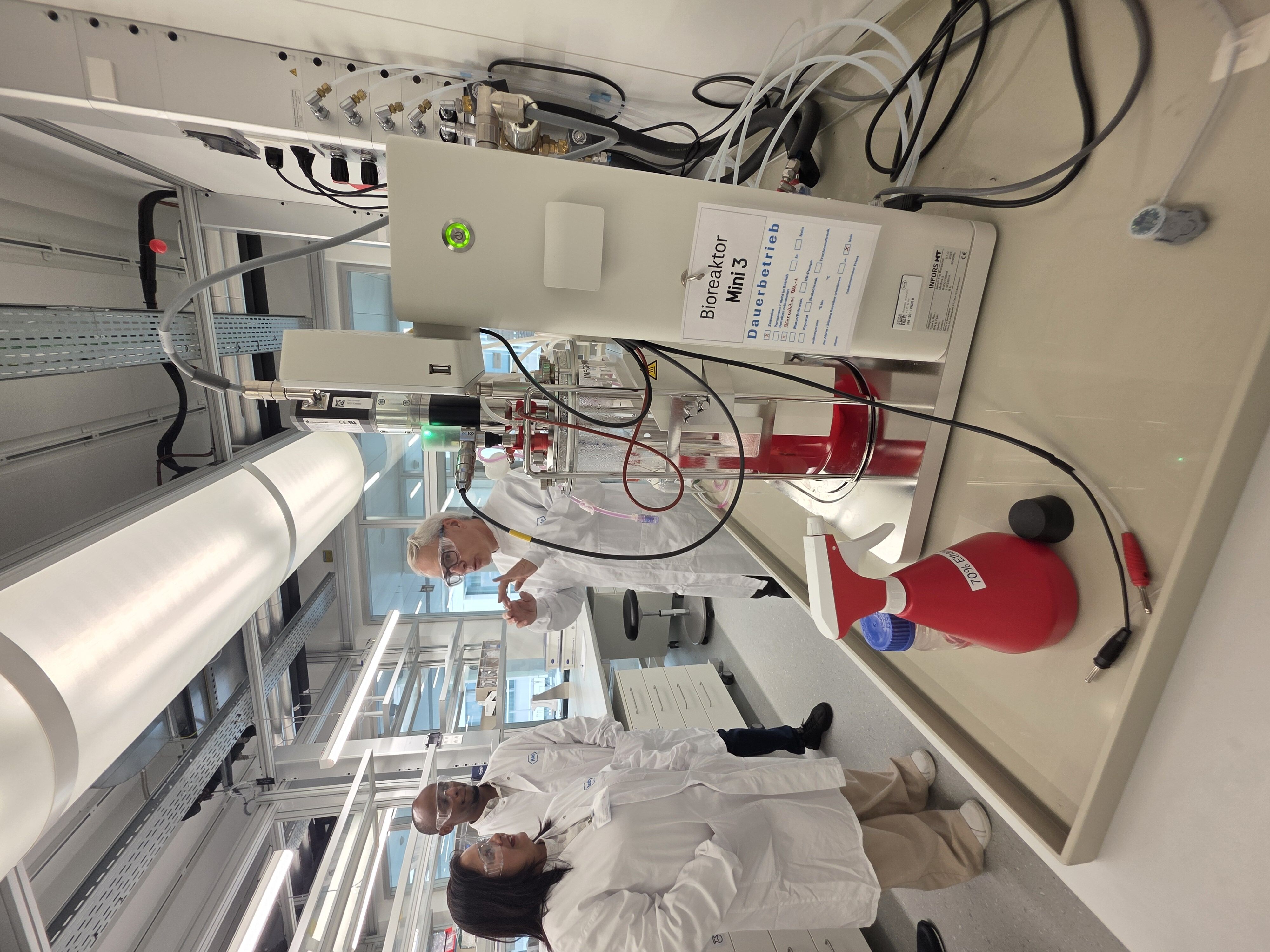
During the final part of the study visit to Switzerland, the group was able to visit major companies such as BSL Behring, Novartis and Roche, which jointly shape the Swiss vocational training system for the pharma and biotech sectors, thereby providing an interesting example for the Rwandan context.
Through its Vision 2050, the Rwandan government aims to take a leading role in the development and application of innovative technologies in the biotechnology and pharmaceutical sectors in the region. The Rwandan government is striving to establish these sectors as key industries within a knowledge-based economy.
There is currently a shortage of skilled workers in the basic and advanced vocational training in these sectors. The Federal Institute for Vocational Education and Training (BIBB) and its partner institutions, the Swiss Federal Institute for Vocational Training (EHB, Switzerland) and the Institute for Educational Research in Business (ibw, Austria), are jointly providing consulting services to the German Organisation for International Cooperation (GIZ) as the Alliance for Dual VET on vocational training issues from January 2026 until the end of October 2027 as part of the GIZ project “Support to establishing the Rwandan pharmaceutical and biotechnology sector”.