The reports and analyses by ReferNet Germany provide information on various aspects of the German VET system. The proceedings from the ReferNet partners’ meeting in Bonn are now available, with a particular focus on the recognition of foreign qualifications, excellence, mobility and AI in VET.
The dataset for the Timeline of VET policies in Europe is now available to researchers. It enables an in-depth analysis of the developments documented by ReferNet since 2015. The data is accompanied by a readme file providing all the background information.
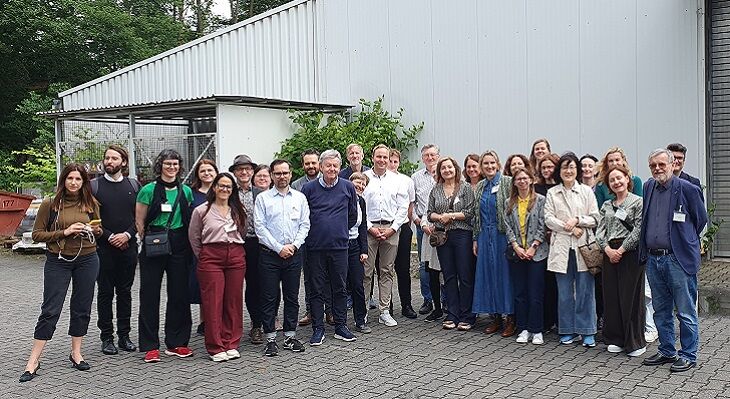
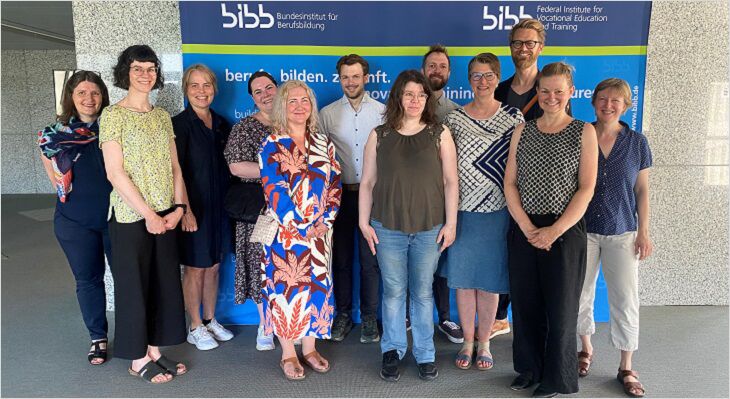
At a meeting of the ReferNet network in May, in-depth discussions took place at the BIBB on current developments in VET across Europe. The focus was on recognition of foreign qualifications, excellence, international mobility and AI. A company visit gave a practical insight into the dual training.
On 20-21 May 2026, the ReferNet team at BIBB, together with Cedefop, is hosting a partner meeting of the network. The focus is on current developments in VET in Europe, such as the recognition of foreign qualifications, excellence and artificial intelligence in VET.
Online surveys on the future development of Europass Certificate Supplements
The European Commission and the Member States would like to learn more about how Europass Certificate Supplements are currently used and how they could be improved. Two online surveys have therefore been launched for stakeholders, learners and employees. The surveys are open until 29 May 2026.
Building bridges for technical education reform in Cambodia
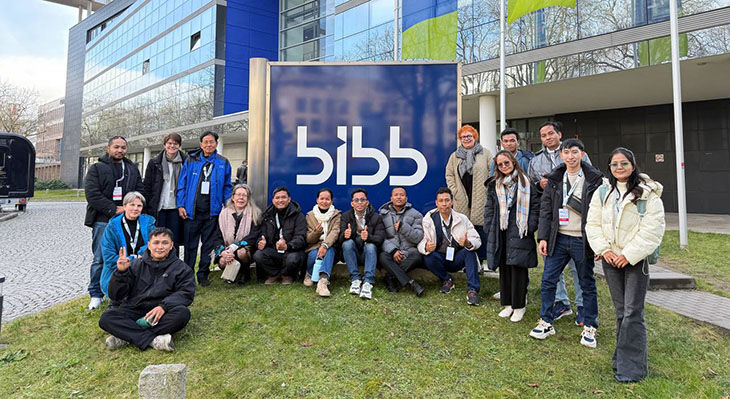
The EU-Twinning project in Cambodia is a collaborative effort designed to support upper-secondary technical education reform and to bolster the nation's technical and VET landscape. The HIBB from Hamburg and the BIBB represent Germany in a consortium, led by France. Finland is also involved.
Cedefop's new Spotlight format offers insights into the labour market landscape, future trends and forecasts of skills needs. The analysis, developed in consultation with the German ReferNet team, is based on various Cedefop tools. The BIBB works as the German partner in ReferNet.
Excellence in VET – Status Quo, Opportunities and Challenges
Excellence in VET is a concept which most European countries as well as the European commission deal with in their policy agendas. The BIBB invited experts from different European countries to discuss the understanding as well as different ways of addressing and researching excellence in VET.
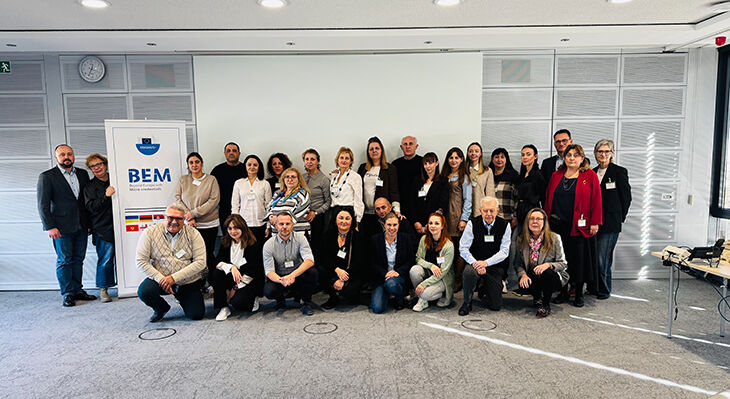
An expert discussion was held in November to discuss the transformative potential of micro credentials in VET. Participants from Armenia, Ukraine, the Western Balkans, Sweden, Croatia and Germany discussed the expected benefits, implementation challenges and strategic approaches.
In March this year the European Commission published its “Union of Skills” strategy. The main content focuses include the role of initial and continuing VET with regard to the development of sustainable competitiveness and for the purpose of securing availability of skilled workers.
This ReferNet report focuses on public financing of adult learning for individuals and companies in Germany. It also looks at current debates and the issue of data availability.
The impact of digitalisation on CVET in Italy: Microlearning and microcredentials
This article deals with the impact of digitalisation on Continuing Vocational Education and Training (CVET) in Italy, focusing on microlearning and microcredentials. The regulatory context surrounding microcredentials underscores their value as a tool for transparency in skill certification.
From labour market to educational system: the case of ESCO
ESCO can be used to structure occupations by aggregating skills and construct qualifications by mapping skills onto learning outcomes. However, qualifications constructed in this way are inadequate for a skilled labour market. The article suggests an alternative approach.
Cedefop study on the current state of transparency and transferability of qualifications in VET in Europe
A Cedefop study on the state of progress of the learning outcome approach in VET in Europe revealed that thematic areas, such as credit accumulation and transfer, quality assurance, recognition of qualifications, and validation systems for non-formal and informal learning, are also relevant.
How can transparency be achieved for the shaping of a European Education Area? The aims of this issue are to consider the different instruments and to highlight their relevance for VET at a national and European level.
Based on 2023 Spotlights on VET, this brochure provides a concise overview of the VET system in each country of the EU, Iceland and Norway. Next to a system chart, it outlines key features of VET as well as challenges and policy responses on two pages per country.
The Cedefop ReferNet database with detailed information on VET systems in the EU, Iceland and Norway, has been updated. It is worth taking a look at the diagrams, as they provide an excellent overview of the variety of systems in Europe; generate reports or compare by country and topic!
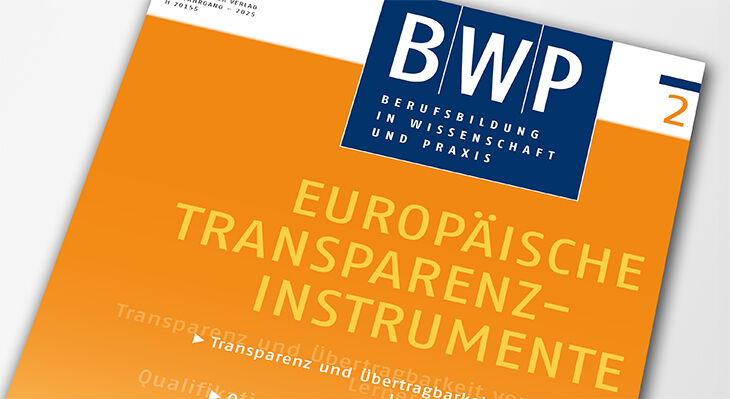
Transparency is crucial in shaping a European Education Area. Its aim is to facilitate communication between the different national education systems. BWP issue 2/2025 “European transparency instruments” takes a look at different instruments, reflecting their origins and relevance to VET in Europe.
An overview of vocational education and training initiatives and programmes in Germany in 2023, successful approaches and challenges from the perspective of European priority setting.
On 20 and 21 June, colleagues from the higher VET department at the Norwegian Directorate for Higher Education and Skills gained an insight into higher VET qualification in Germany. The agenda included talks at BIBB but also at a chamber of skilled crafts and a company.
How do we understand early leaving from VET in Germany? The situation is presented based on two indicators. Further, factors that can lead to a premature termination of training are addressed and preventive measures are presented. The impact of the COVID 19 pandemic on ELVET concludes the report.
National Implementation Plans (NIPs) on VET in Europe available online
In their NIPs, EU member states and candidate countries present measures taken at national level in the field of vocational education and training to achieve common goals at EU level. Specifically, goals and priorities set in the 2020 EU Council Recommendation on VET and the Osnabrück Declaration.
European “Peer Learning Activity”: VET and the green transition
On 24-25 October, 41 experts from across Europe discussed the role of vocational education and training for the ecological transformation. To get insight into German best practices, the European Working Group was invited to Bonn by the BMBF and the European Commission.
The Cedefop ReferNet database with detailed information on VET systems in the EU, Iceland and Norway has been updated. Have a look at diagrammes, generate reports or compare by country and theme! Since 2019, the contents of the "VET in Europe" reports are available online.
The European network is turning 20 years in 2022! In the national teams, experts not only provide information on the national VET system, they also act as a broker of information on VET across Europe through the network.
Teams of VET learners can share their experience related to green or digital skills in a photostory or video clip for a chance to win trips to the European Vocational Skills Week 2022 or to the Thessaloniki Documentary Festival.
Erasmus+ Project EXPOVET - European joint further qualification for export experts
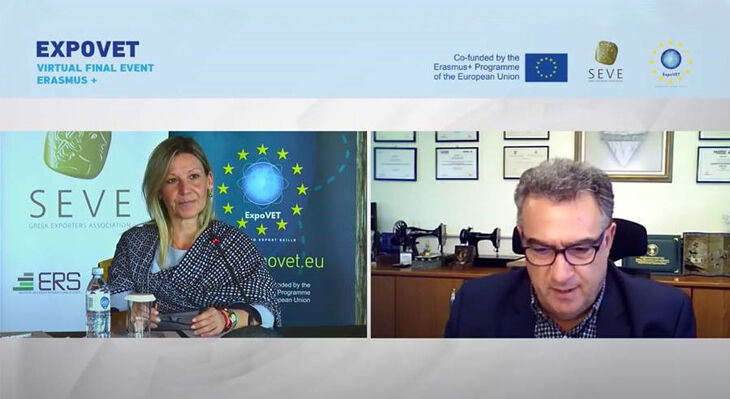
The project ‚Export Expert‘ held its final forum on 26 March 2021 presenting its EQF level 6 qualification for international trade. Three universities and business representatives developed this joint qualification, building up on expertise across borders of Greece, Bulgaria, Romania and Germany.