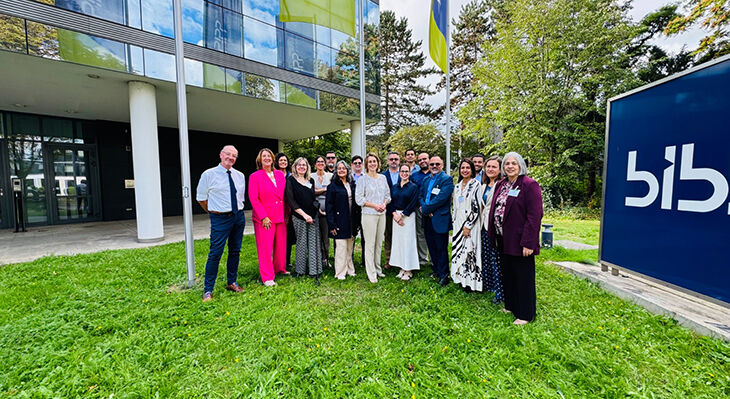
Applications for recognition of qualifications from Egypt and Morocco are rising significantly. BIBB and GIZ are working in Egypt, Morocco and Tunisia to ensure that professional recognition is considered at an early stage.
Study visit by the Alliance for dual VET in Latin America and the Caribbean combines insights into the German system of vocational education and training (VET) with an international exchange of experiences.
BIBB delegation heads to WorldSkills Conference Shanghai
International exchange, global partnerships and the future of vocational education and training will be at the heart of BIBB’s participation in the upcoming WorldSkills Conference in Shanghai. A delegation will represent BIBB and contribute to the further development of the TGTA initiative.
GOVET Podcast "TVET Talks" featuring global voices
The TVET Talks Podcast is a GOVET platform for exchanging international VET experiences. The podcast is touching latest insights to other vocational systems around the globe, giving countries an easy, accessible format to the community – inspiring and right to the point. Let’s talk TVET!
Webinar: Strengthening TVET systems through network collaboration
The second TGTA webinar explored the role of international networks in the “Towards a Global TVET Agenda” initiative. As the global UNEVOC Network shows, collaboration, knowledge generation and capacity development help shape adaptable TVET systems.
The reports and analyses by ReferNet Germany provide information on various aspects of the German VET system. The proceedings from the ReferNet partners’ meeting in Bonn are now available, with a particular focus on the recognition of foreign qualifications, excellence, mobility and AI in VET.
Unlocking potential to meet the demand for skilled workers through quality-assured, modular training geared towards obtaining a full vocational qualification. Partial qualifications are aimed at people over the age of 25 who have work experience but do not hold a recognised vocational qualification.
Apprenticeship training or external recruitment of skilled workers
The shortage of skilled workers remains one of the dominant issues on the labour market. One way to counter this shortage at the firm level is to invest in apprenticeship training. Research results of the Federal Institute for Vocational Education and Training (BIBB).
Dr Sandra Garbade became President of the Federal Institute for Vocational Education and Training (BIBB) on 1 August. Her appointment means that BIBB is led by a woman for the first time. She succeeds Professor Dr Friedrich Hubert Esser, who retired on 30 June 2026.
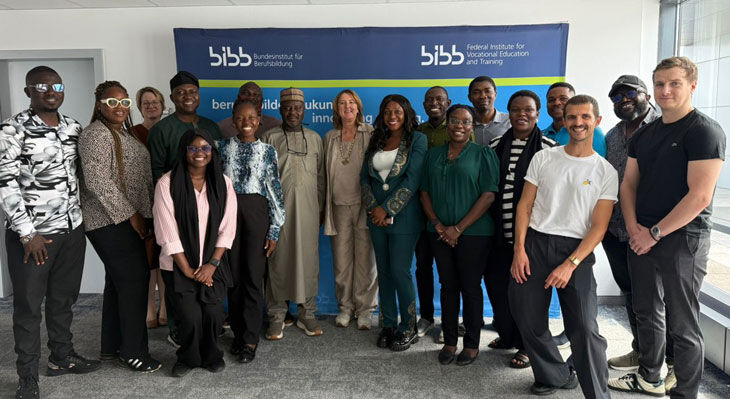
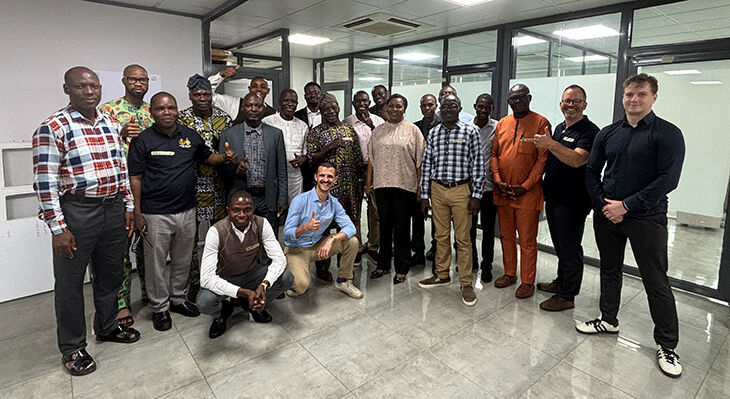
Fifteen experts from Nigeria’s waste and recycling sector spent two weeks in Bonn and Berlin — visiting landfills, labs and workshops, and starting work on a National Occupational Standard set to professionalise a largely informal sector.
Five years of Alliance for Dual VET in Latin America
At the end of June, the Alliance for Dual Vocational Training in Latin America and the Caribbean celebrated its fifth anniversary. Following the commemorative ceremony, experts discussed in a webinar how dual models can be implemented in economies with high levels of informality.
Dr Sandra Garbade will be the new President of the Federal Institute of Vocational Education and Training (BIBB) in Bonn. She takes up the position on 1 August 2026. Sandra Garbade succeeds Professor Dr Friedrich Hubert Esser, who retired on 30 June 2026 after more than 15 years in office.
Germany and Uzbekistan sign Joint Declaration of Intent
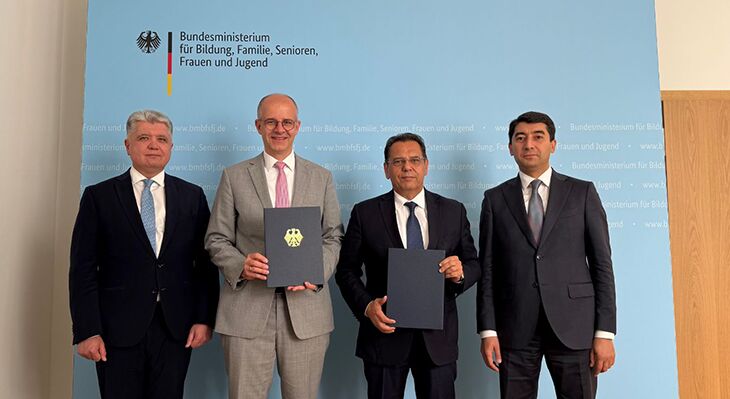
The German Federal Ministry of Education and the Uzbek Ministry of Education have initiated cooperation in the field of vocational education and training through a joint declaration of intent. The aim is to strengthen knowledge exchange and create opportunities for mutual learning.
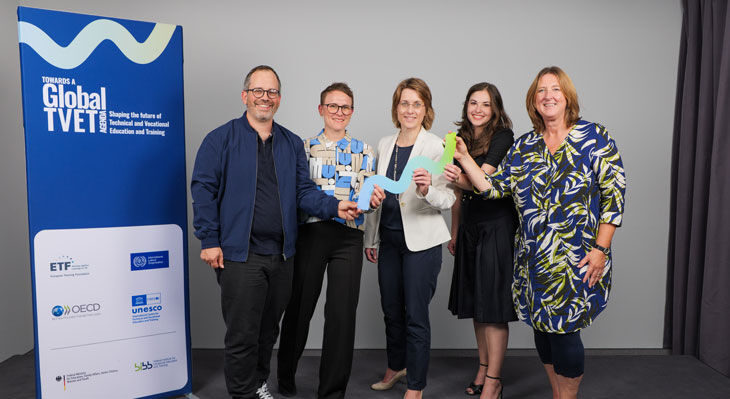
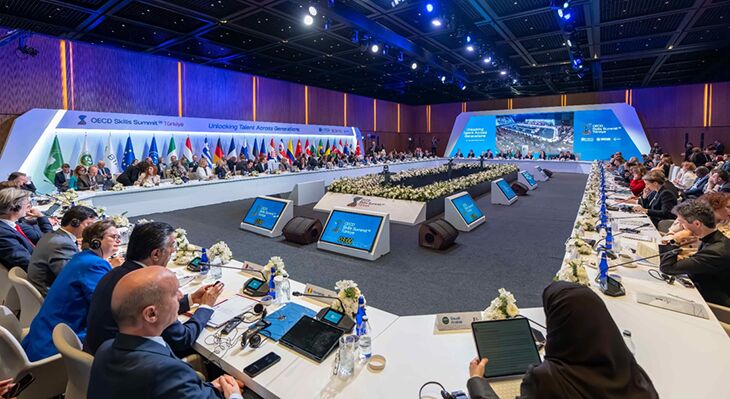
A successful side event on the “Towards a Global TVET Agenda” initiative engaged high-level representatives from government, international organizations, and the global TVET community in a forward-looking dialogue on TVET system development.
Nigeria is in the middle of a green economic transition. Preparing the VET system to meet this demand, BIBB experts trained the first cohort of Green Skills Trainers in Lagos as part of the GIZ Skills and Youth Employment (SKYE) project in Nigeria.
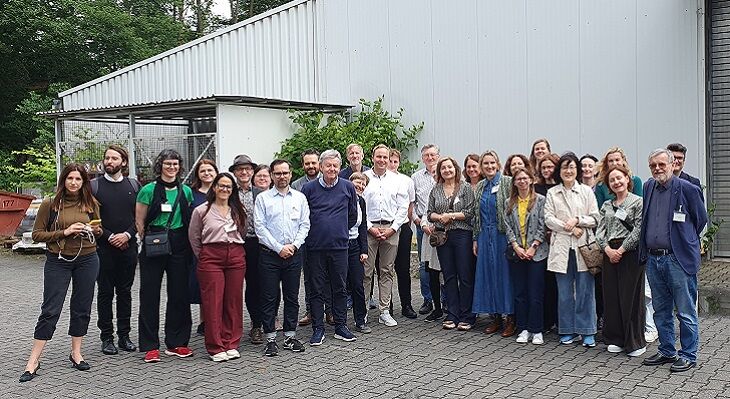
At a meeting of the ReferNet network in May, in-depth discussions took place at the BIBB on current developments in VET across Europe. The focus was on recognition of foreign qualifications, excellence, international mobility and AI. A company visit gave a practical insight into the dual training.
The most frequently asked questions regarding the German VET System, the recognition of qualifications or on how to start a career in Germany will be answered here.
The glossary is a source for terms and definitions which are used in the field of vocational education and training. Emphasis is placed on its usage in the context of the German dual system. The VET Glossary is a work in progress and updated and expanded on an ongoing basis.
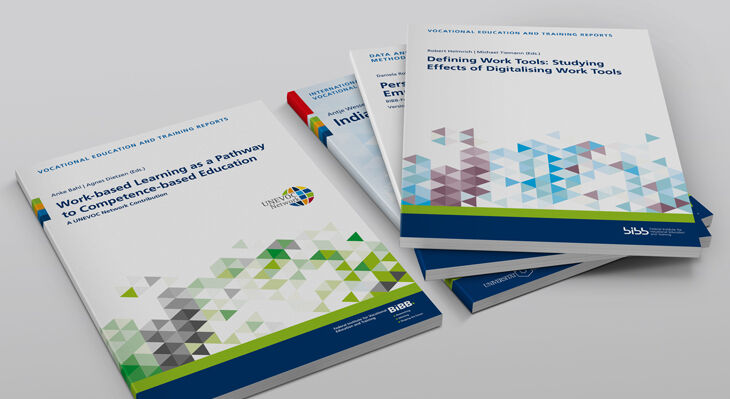
The BIBB publishes its research and work results in different series. You will find all BIBB publications in the index of publications. A selection of publications is available in English.
Dual VET - Vocational Education and Training in Germany
VET and Artificial Intelligence: Prof. Dr. Hubert Ertl, Vice President and Director of Research (BIBB)
Linguistic diversity at the BIBB - Germany Diversity Day 2026
iMOVE Online Presentation: Bridging Courses for India (Video on YouTube)
Publications
The Training Market 2025
"In 2025, the situation on the training market worsened: despite rising demand, the number of training places and new training contracts fell again. The tense economic situation in Germany is thus also reflected in the training market. Around 84,400 young people were unsuccessful in their search for a training place. These are the key findings of the BIBB analysis on the development of the training market in 2025. The analysis is based on the BIBB survey of newly concluded training contracts and on the training market statistics of the Federal Employment Agency (BA), both as of 30 September. The publication provides a comprehensive overview of the training market in 2025 and current developments in supply and demand."
After the training market slowly recovered from the losses caused by the coronavirus pandemic in recent years and slight growth was recorded again, the number of newly concluded training contracts in 2024 fell by 0.5 per cent compared to the previous year to around 486,700 contracts. This is one of the key fi ndings of the BIBB’s analyses of the development of the training market in 2024. It is based on the BIBB survey of newly concluded training contracts as of 30 September and on the training market statistics of the Federal Employment Agency. The publication provides an overview of unsuccessful market entries and matching problems, as well as the supply of and demand for training places.
The Data Report of the Federal Institute for Vocational Education and Training (BIBB) provides a comprehensive overview of the actual data on the German Vocational Education and Training system and is published yearly in German. This current English version of the Data Report presents a selection of the most relevant data and analyses of the 2023 Data Report. It contains extensive information and analyses relating to initial and continuing vocational education and training and covers international indicators and benchmarks. The special focus of this Data Report is “Innovations in vocational education and training via programmes.”. The essential strength of the Data Report lies in the interplay between standardised reporting supported by time series and changing surveys that look at current developments and challenges. The overall picture it provides creates a central reference work on vocational education and training for the fields of academic research, policy and practice.
Quality Assurance in Company-Based Practice – Planning and Structuring of In-company Training by Way of the Example of the Occupation of Office Manager
The present study looks at the instruments and procedures deployed by companies to ensure successful training in the occupation of office manager. The investigation facilitates an insight into the specific design and use of planning and structural tools in training practice. Alongside the mandatory elements of the company training plan and the report booklet, these include further voluntary evaluation and feedback measures. 238 telephone-based interviews with training management departments and 13 company case studies relating to the occupation of office manager were evaluated in the study. The three areas of training – the crafts, trade and industry and the public sector – were compared with one another.
Methods of competence assessment in vocational education and training (VET) in Germany - A systematic review
The present study provides a systematic overview of the methods of competence assessment in German vocational education and training (VET). To this end, 58 publications from the years 2001 to 2017 have been reviewed regarding the occupational areas for which assessment instruments were developed, types of competences that were assessed, the types of instruments used to assess the competences and the psychometric properties of these instruments. The results indicate that the instruments described in the reviewed publications particularly address commercial, industrial-technical and health occupations. The majority of the instruments deal with the identification of professional competences (66%), followed by basic (24%) and social/communicative competences (9%).
The Data Report of the Federal Institute for Vocational Education and Training (BIBB) provides a comprehensive overview of the actual data on the German Vocational Education and Training system and is published yearly in German. This current English version of the Data Report presents a selection of the most relevant data and analyses of the 2019 Data Report. It contains extensive information and analyses relating to initial and continuing vocational education and training and covers international indicators and benchmarks. The special focus of this Data Report is “Vocational education and training 4.0 – skilled worker qualifications and competencies for the digitalised work of the future”.
Sustainability is one of the greatest social challenges in this day and age. Climate protection, fair working conditions and responsible neighbourhoods are becoming increasingly important issues for companies. A sustainable in-company learning environment helps employees to develop sustainability-related skills. These skills play a crucial role when it comes to acting in line with the guiding principle of sustainability. Companies are already doing a great deal to increase sustainability. However, there is still substantial potential to do more. This guideline describes four key areas for designing sustainable learning venues with a total of 13 areas of action. It provides practice-oriented suggestions for implementation in companies. The guideline thus not only brings fresh momentum for reporting, but also contributes to anchoring sustainable development more firmly into the structure of initial and continuing vocational education and training at companies.
Occupational Participation of Persons with Disabilities: Perceptions and Empirical Evidence
The quality of employment of employees with disabilities differs from that of employees without disabilities only for a few selected indicators. This is shown by analyses based on a follow-up survey of the BIBB/BAuA Employment Survey (ETB) 2018. The follow-up survey also includes a survey experiment on the perception of the situation of people with disabilities on the labour market. A significant proportion of respondents misperceive the gap in labour force participation between people with and without disabilities. Employed persons with disabilities assess the labour market integration of persons with disabilities to be worse when they are informed about the actual gap in labour market participation.
The presentation ‘Dual VET in Germany’ offers interested parties from abroad an overview of the German dual vocational training system. It is available in 11 languages.
The most frequently asked questions regarding the German VET System, the recognition of qualifications or on how to start a career in Germany will be answered here.