German-Philippine research dialogue
In mid-January, five experts from the Technical Education and Skills Development Authority (TESDA) in the Philippines visited BIBB. Research approaches for strengthening evidence-based policy advice and German VET research were discussed with BIBB experts.
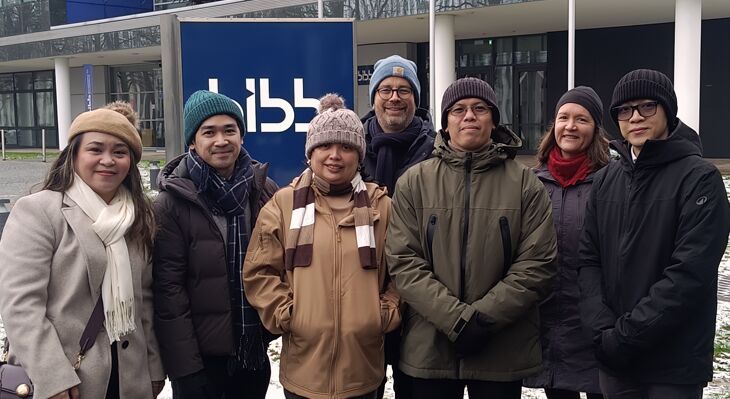
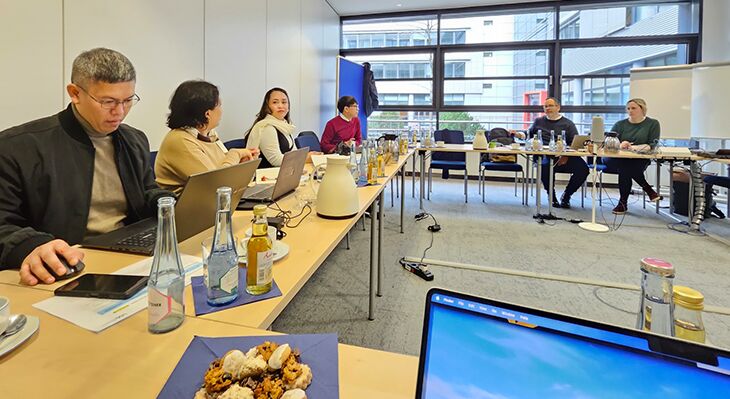
Is one week enough time to gain a sound overview of German VET research? In mid-January, five TESDA experts working with company training programmes, monitoring and strategic planning visited the BIBB for this mission. The expert exchange with the BIBB colleagues focused on the following questions:
- What approaches can be used to improve VET research capacities in the Philippines?
- What VET data is available and how can other data be collected independently?
- How can projections be designed and implemented in individual sectors?
- Which research projects contribute to the implementation of needs-based policy approaches?
During the stay, they exchanged ideas with numerous experts and also gained valuable practical insights. By the end, the individual impressions and programme came together like pieces of a puzzle to form a coherent picture of German VET in general and VET research in particular., This group had already taken part in a week-long online knowledge transfer workshop about BIBB together with other TESDA colleagues from regional offices in December 2025.
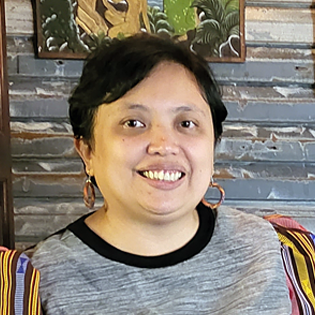
Christina Maureen DulceActing Chief Planning Office at TESDA
"Among other things, I was very impressed by the research coordination at BIBB. We will consider organizing a kind of research committee with membership from key players in VET research in the Philippines. The broadest possible participation can enrich both research and policy-making."
The delegation's main interest was in research and research methods in German vocational training. The following BIBB experts BIBB took part:
- Dr Sandra Liebscher (Head of the Research Coordination Unit): Strategic planning, quality assurance and scientific management of the BIBB research programme
More information on the Research Coordination Unit - Dr Paula Protsch (Junior Professor for Methods of Social Science Research in VET at the University of Cologne – joint appointment with the BIBB): Technical discussion on methods for an annual TESDA survey on employability
- Dr Verena Eberhard and Julia Gei (Division 1.1): Presentation of the BIBB data report and insights into the organisation of a large-scale survey (BA-BIBB-IAB applicant study)
More information on Division 1.1 - Dr Tobias Maier (Head of Division 1.2): Labour market forecasts as part of evidence-based vocational education and training guidance
- Michael Thiemann (Head of Division 1.2): BIBB projects on qualifications, vocational integration and employment
- Dr Ralf Dorau (Division 1.2): Vocational integration after in-company training and prospects for the utilisation of gender-atypical vocational training
More information on Division 1.2 - Dr Felix Wenzelmann and Carolin Linckh (Division 1.3): Costs and benefits of in-company training
More information on Division 1.3 - Felix Lukowski and Anett Friedrich (Research Data Centre): Processing and provision of data
More information on the Research Data Centre - Dr Hannelore Mottweiler (Division 2.2): BIBB activities in the thematic research clusters
More information on Division 2.2 - Dr Inga Schad (Division 2.3): Analysis of competence requirements and modernisation of training occupations in the field of industrial and technical professions
More information on Division 2.3 - Julia Olesen (Federal Government's Central Office for International VET Cooperation, GOVET at BIBB): Presentation of an international publication on VET strategies based on data monitoring (to be published in April)
More information on GOVET
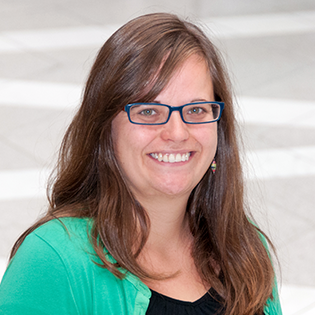
Anett FriedrichBIBB Research Data Centre
"VET research in Germany has a surprising number of similarities with the Philippines. This also applies to the challenges we face. For example, I found it very interesting that in both countries we are struggling with the fact that training occupations cannot be clearly identified using the respective national occupational classification."
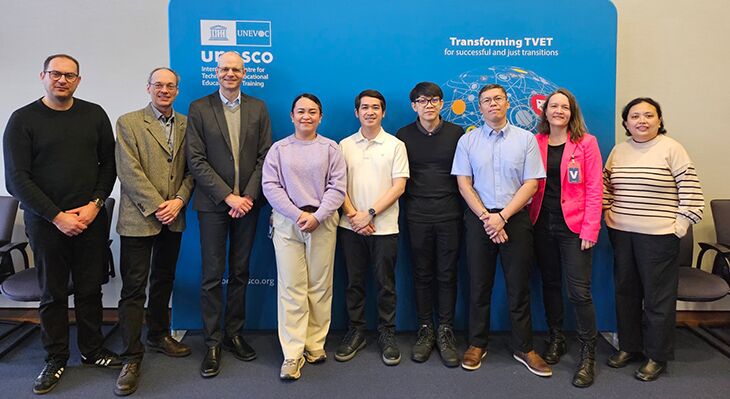
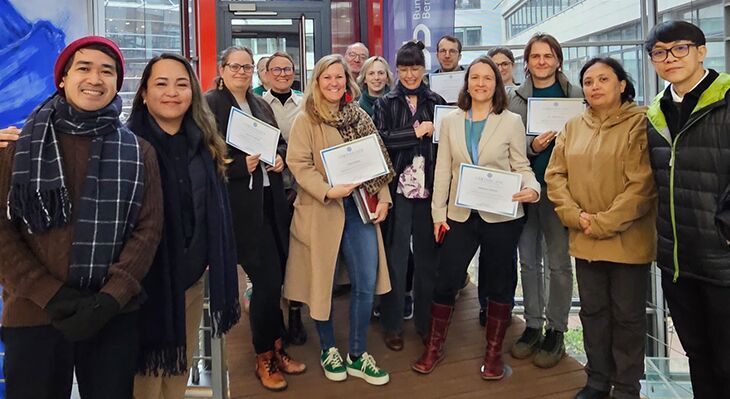
The exchange was complemented by a visit to the International Centre for Technical and Vocational Education and Training (UNESCO-UNEVOC) based in Bonn. Here, the delegation was warmly welcomed by the Head of UNESCO-UNEVOC Friedrich Huebler. During the meeting, UNESCO-UNEVOC’s data-based services were presented to the delegation, such as country data on TVET and the Global Skills Tracker. The latter is an AI-based tool that uses real-time job data to show which skills are in particular demand worldwide – by country, sector and profession.
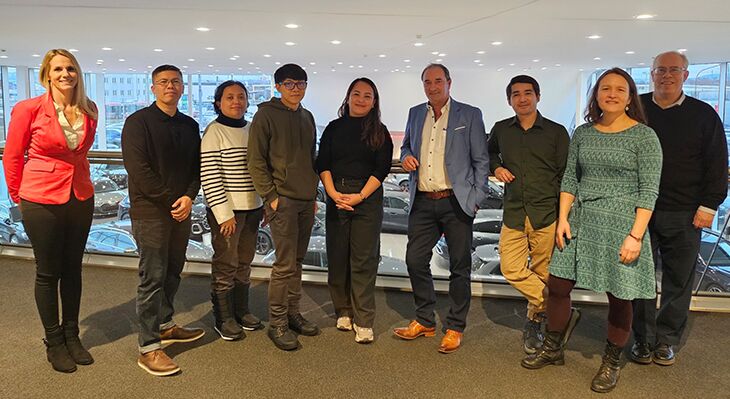
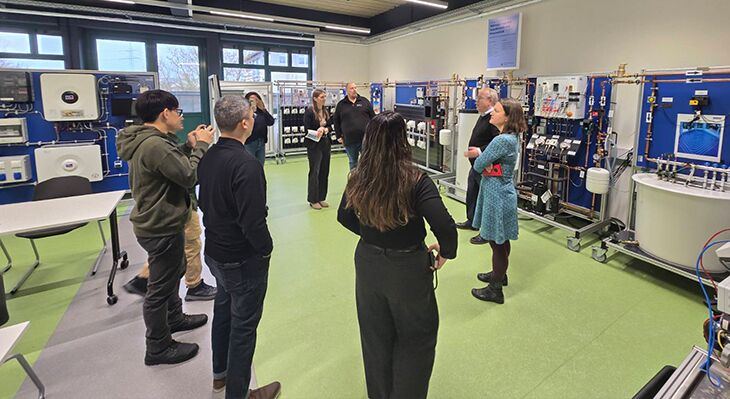
The Filipino guests also were able to experience what German dual VET looks like in practice. Starting off with a visit to the Koblenz Chamber of Crafts inter-company training centre, followed by a car dealership that is currently engaged in training young people within the commercial and automotive sectors. During the tour, managing director Holger Maria Schwarz emphasised the importance of young skilled workers for society as a whole: "If companies in Germany stopped providing training, my company would have to close in 15 years at the latest." Motivating employers to participate in in-company training is just one of the challenges currently facing the VET systems in both countries. Overall, the German-Philippine dialogue provided numerous ideas on common topics and encouraged critical reflection on possible solutions.

Julia Gei BA-BIBB-IAB Applicants' Study on the Apprenticeship Market
"We found the exchange with the TESDA experts to be extremely constructive and valuable. Questions from outside help us to critically reflect on our own work. At the same time, we hope that the presentation of our work has also provided useful ideas for TESDA's initiatives."